Natalia Lvova: “I Paint 14 Hours a Day!”
Text: Natalia Tyumentseva
Photography: Igor Mazutsky
Section: Art Club
A self-taught artist from Tyumen told Miraman about the remarkable painting style she invented and shared the principles behind her way of life.
Dossier
Natalia Lvova, artist. Formerly a successful marketing specialist. Creator of the TwiddleART painting technique. In her family life, she follows Vedic principles. Vegetarian. Practices yoga. Believes that faith in yourself accounts for 90 percent of success.
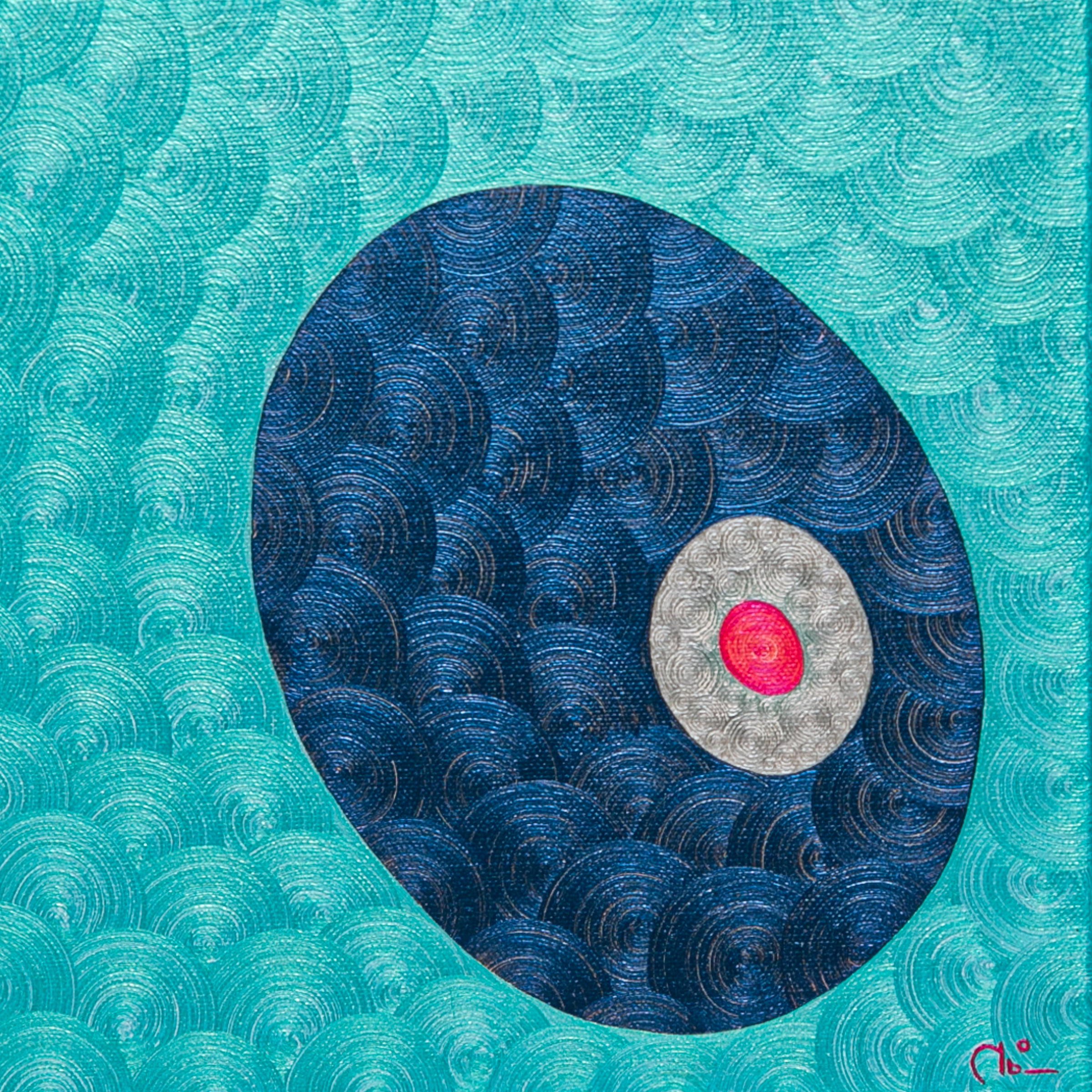
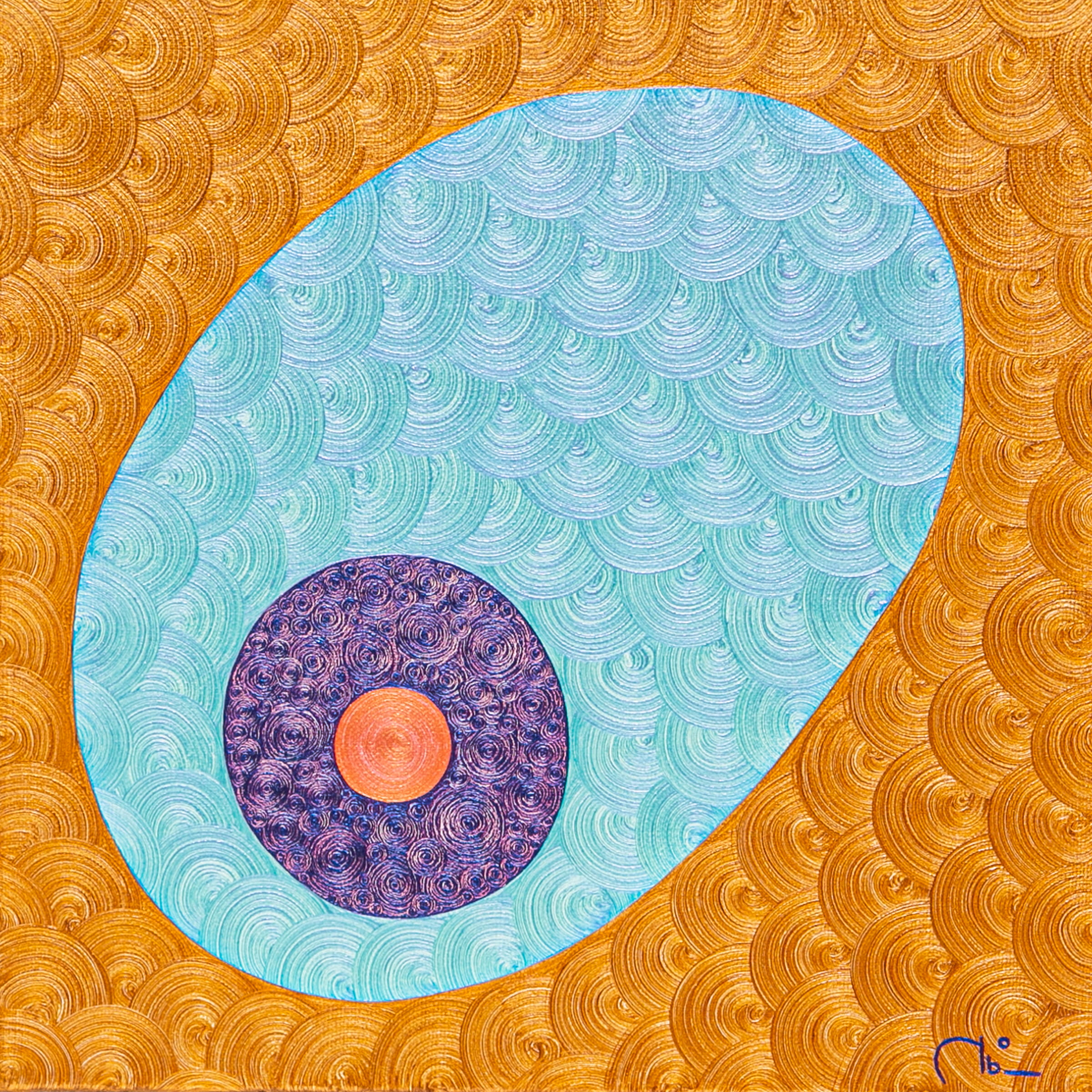
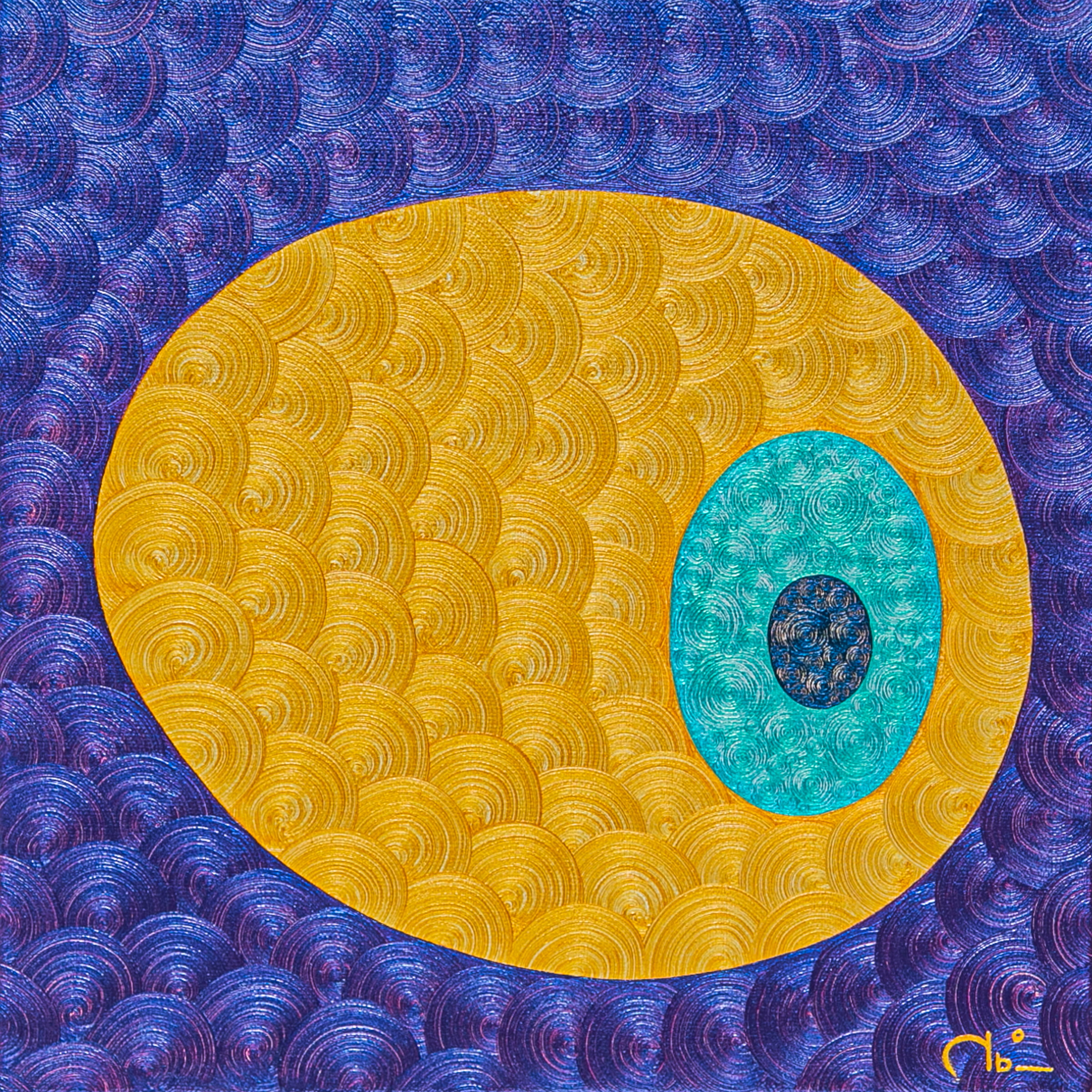
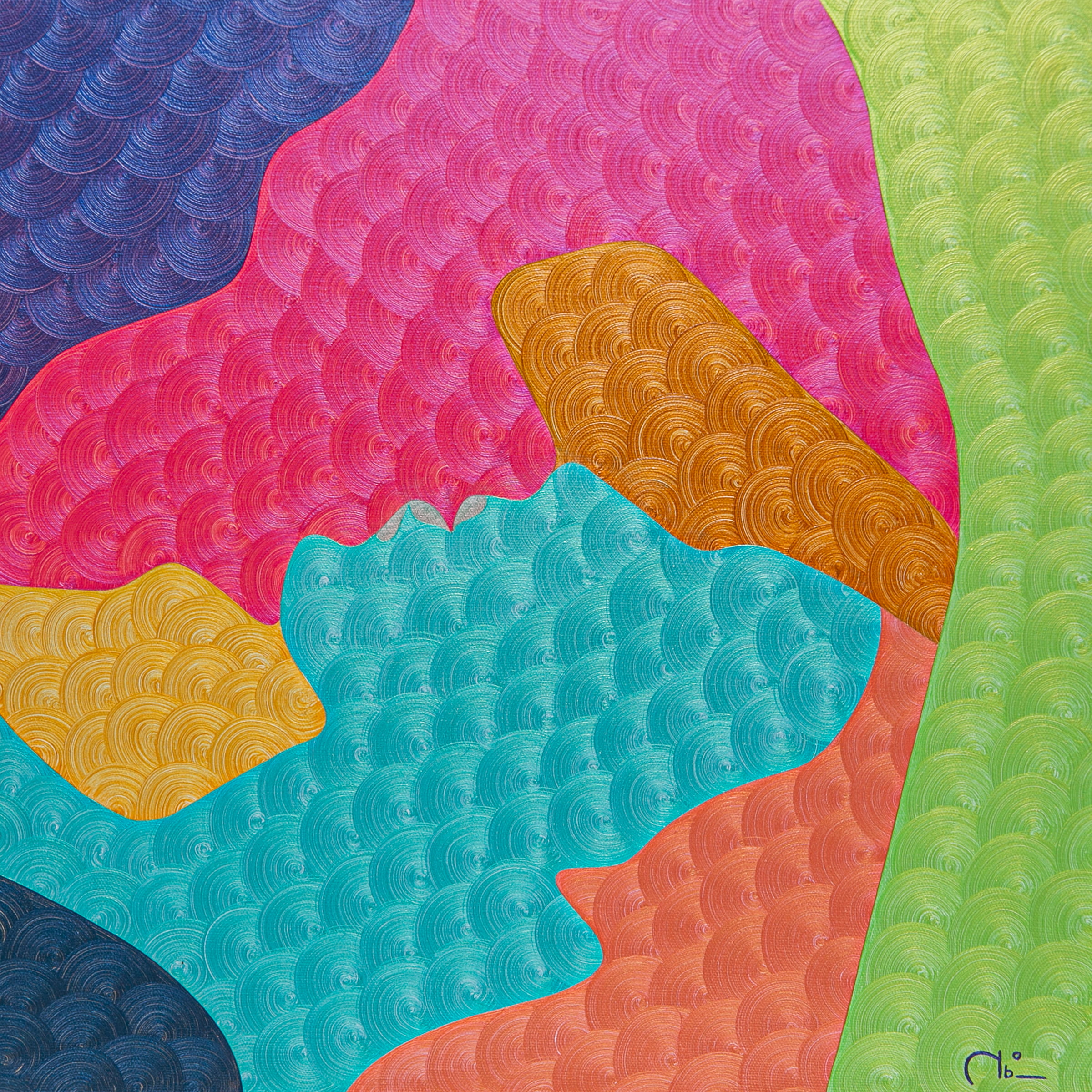
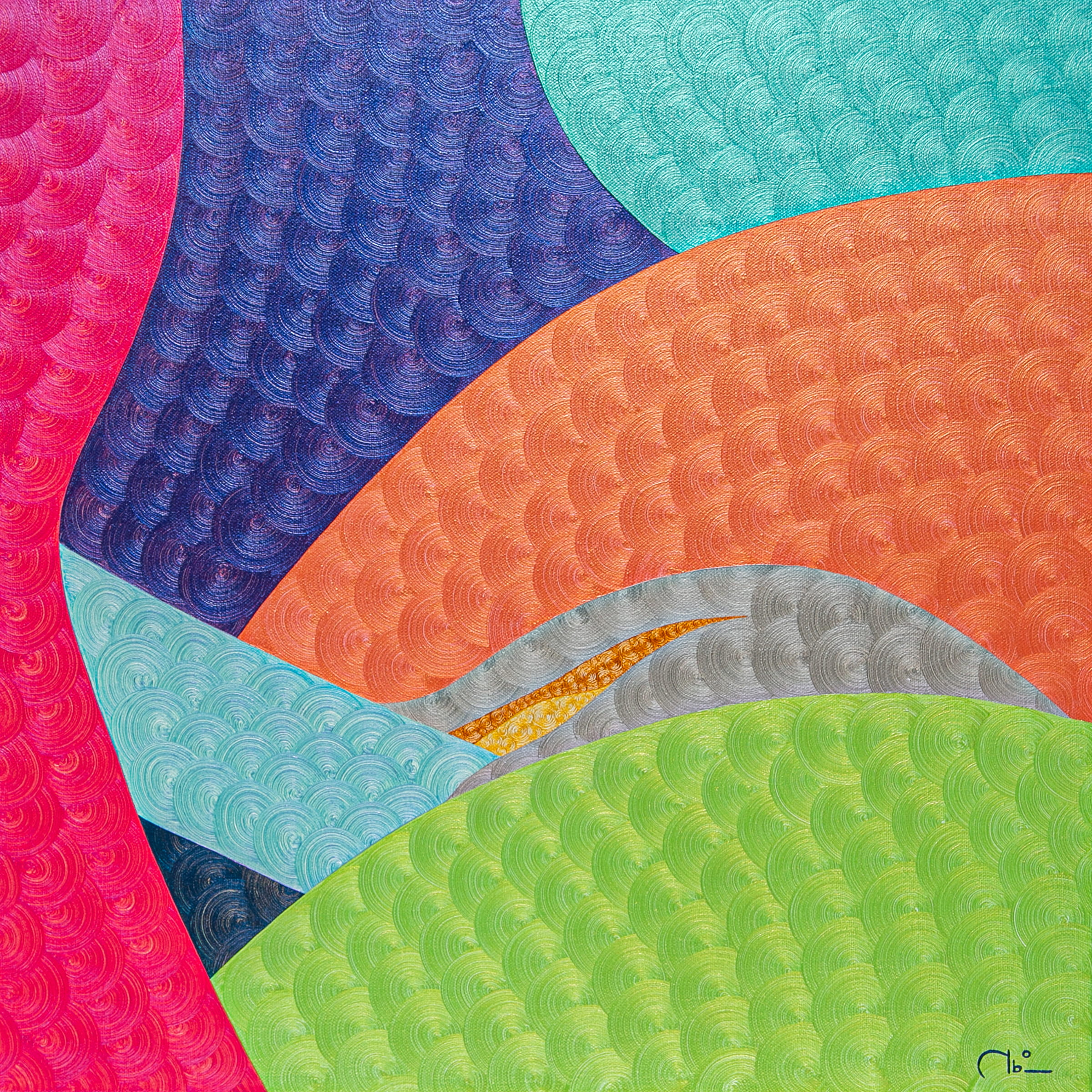
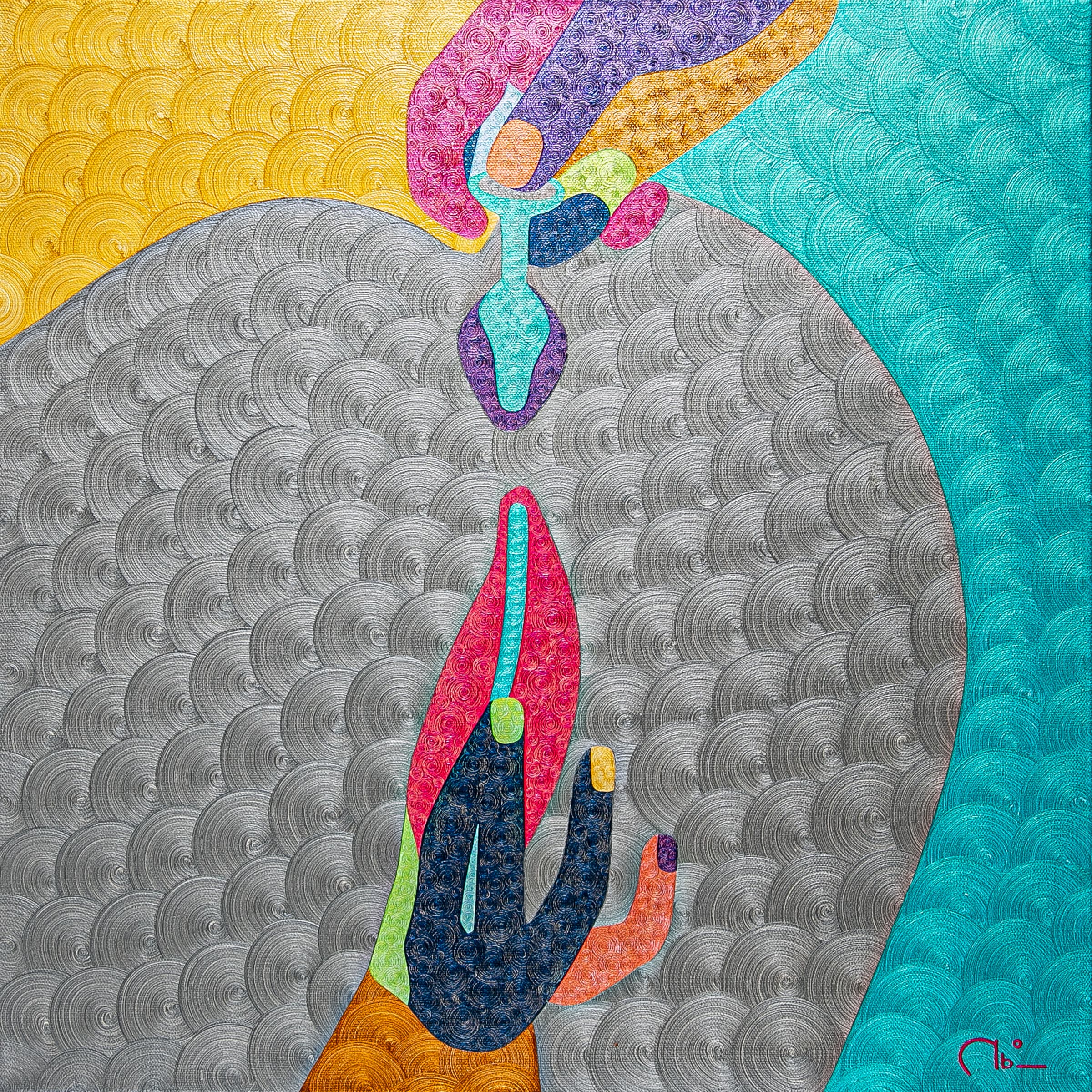
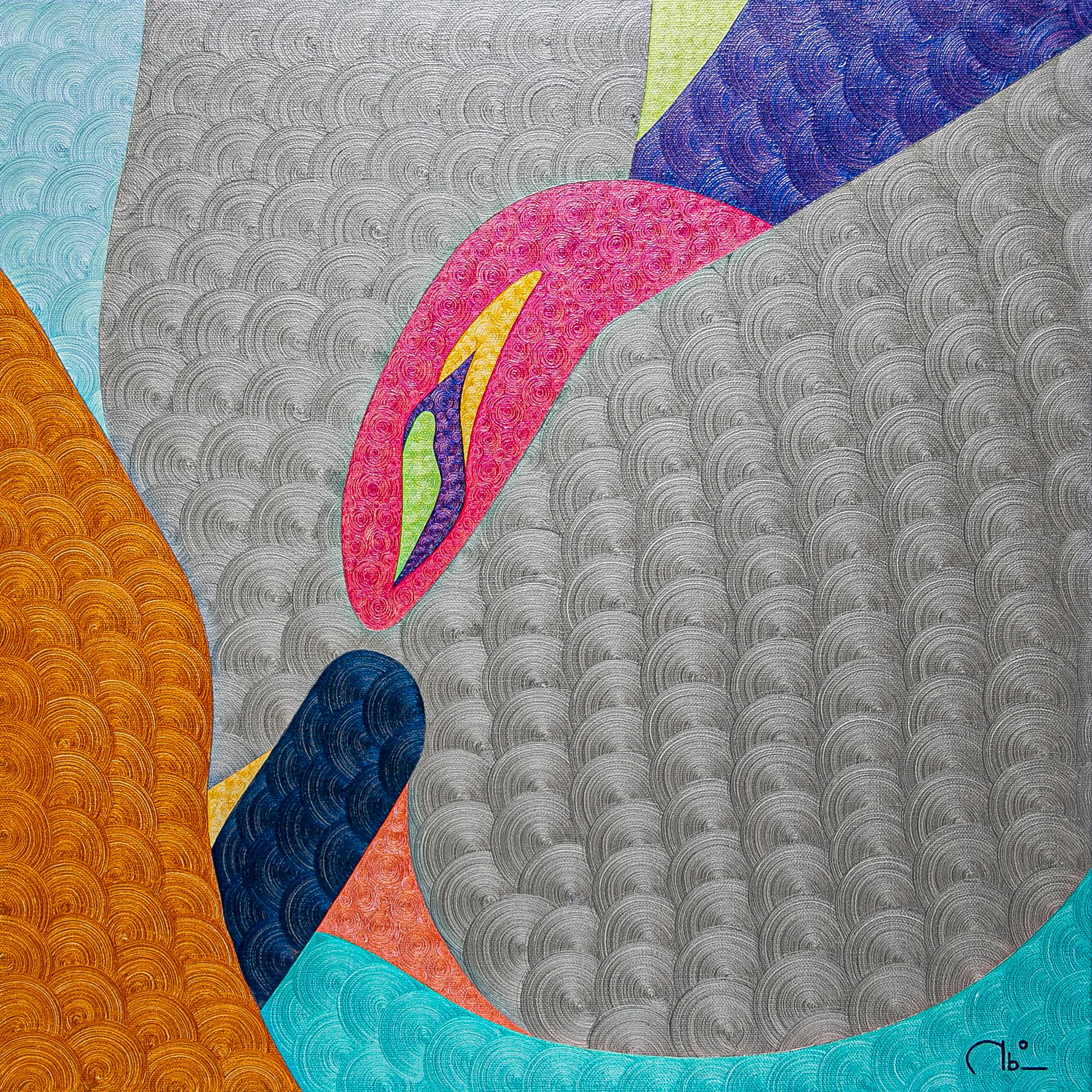
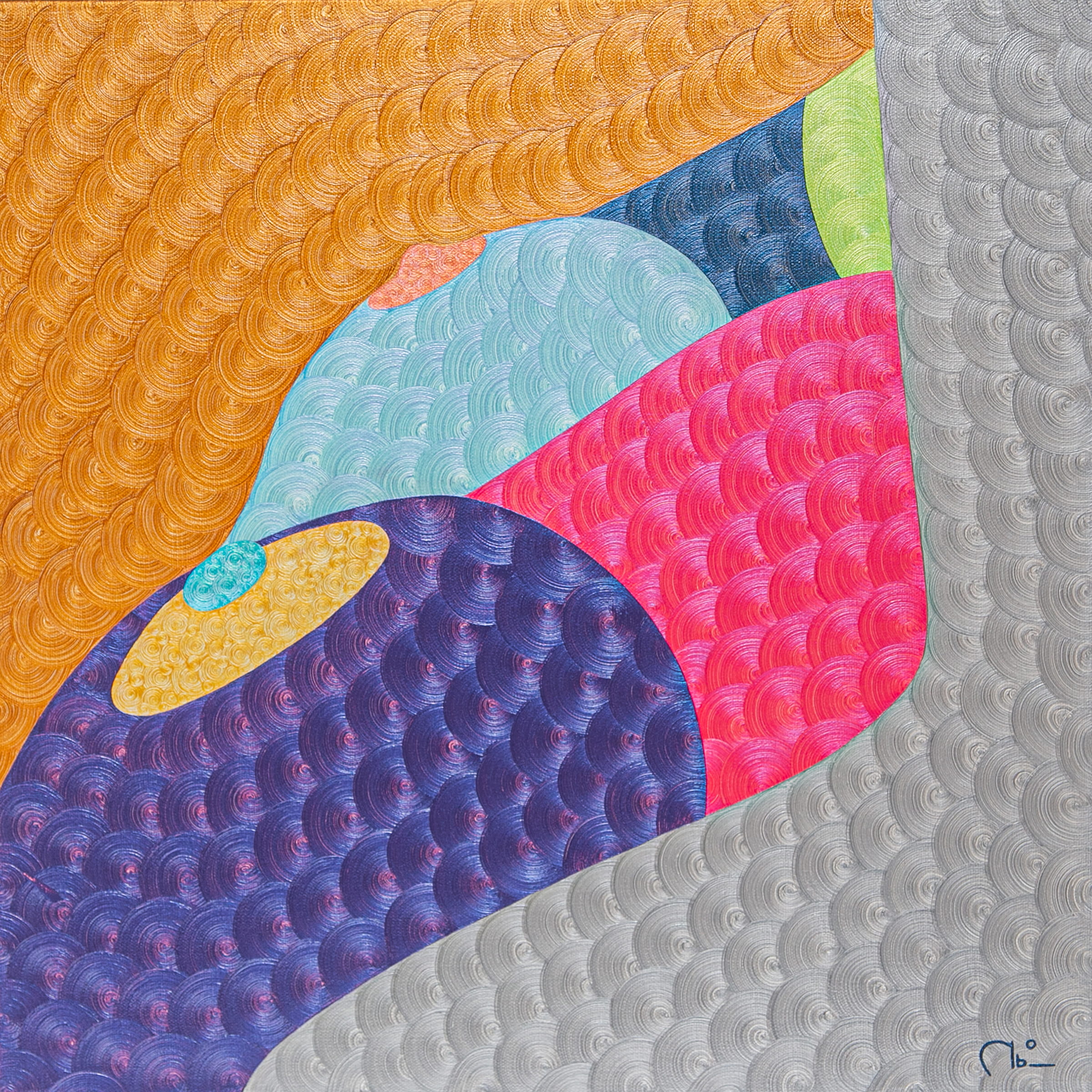
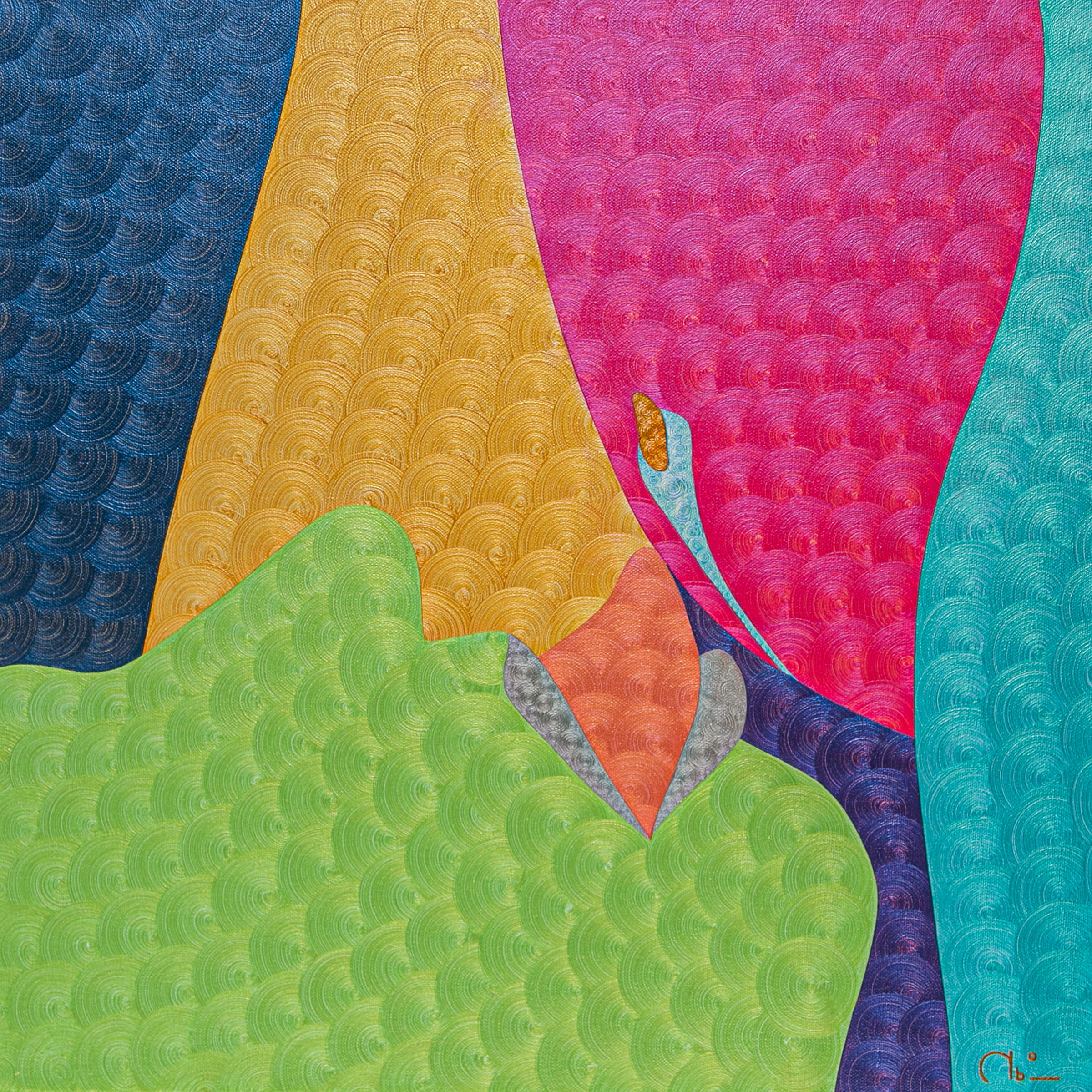
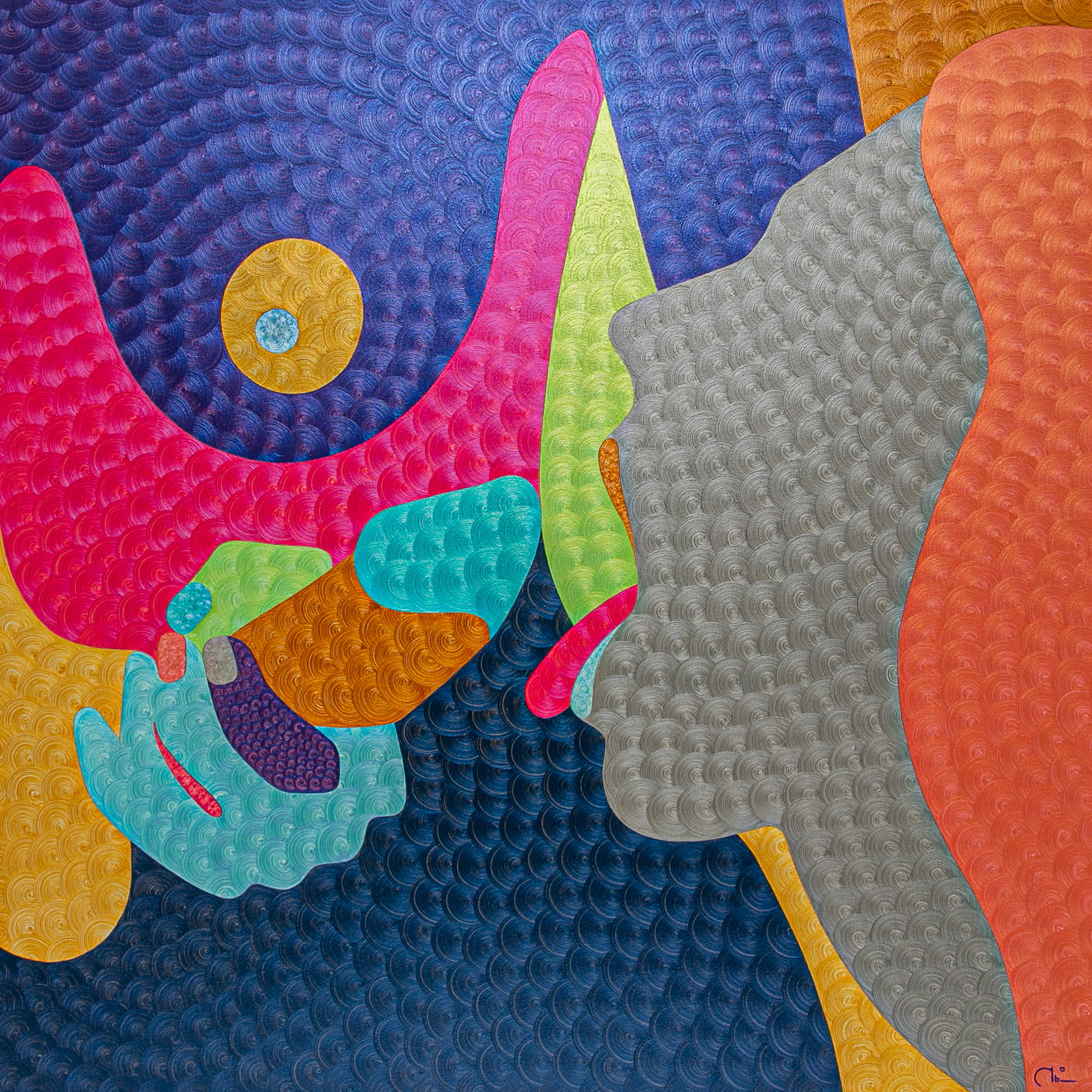
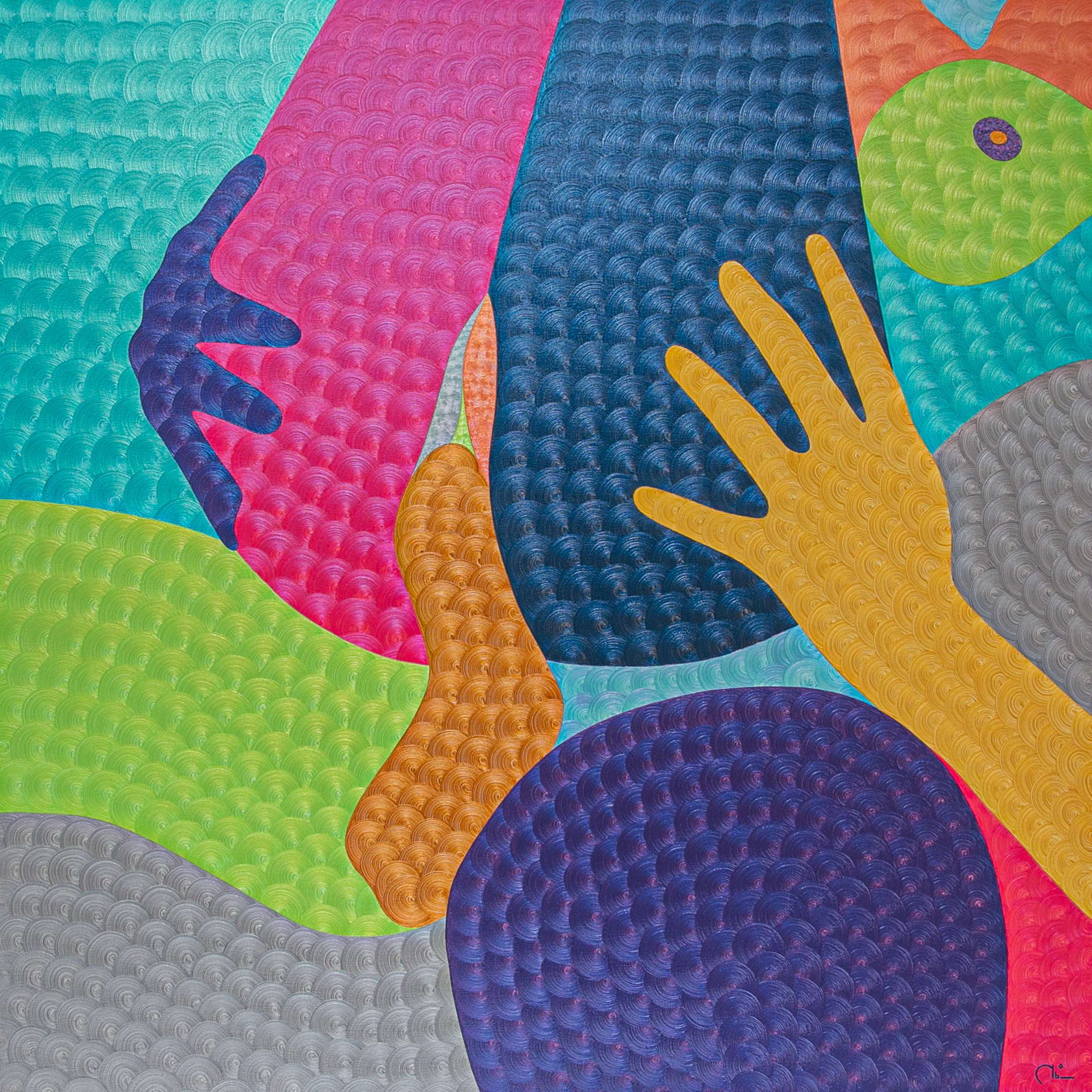
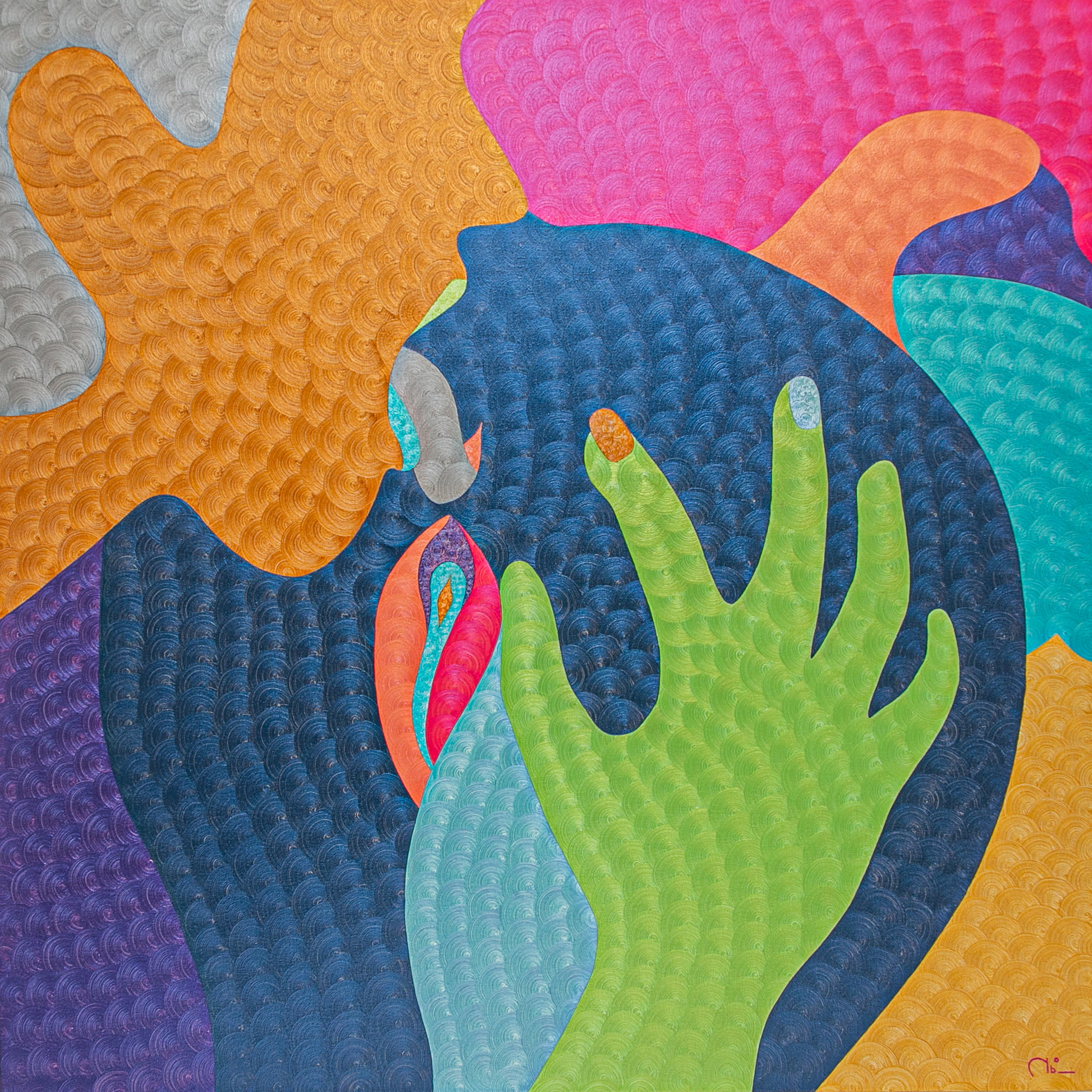
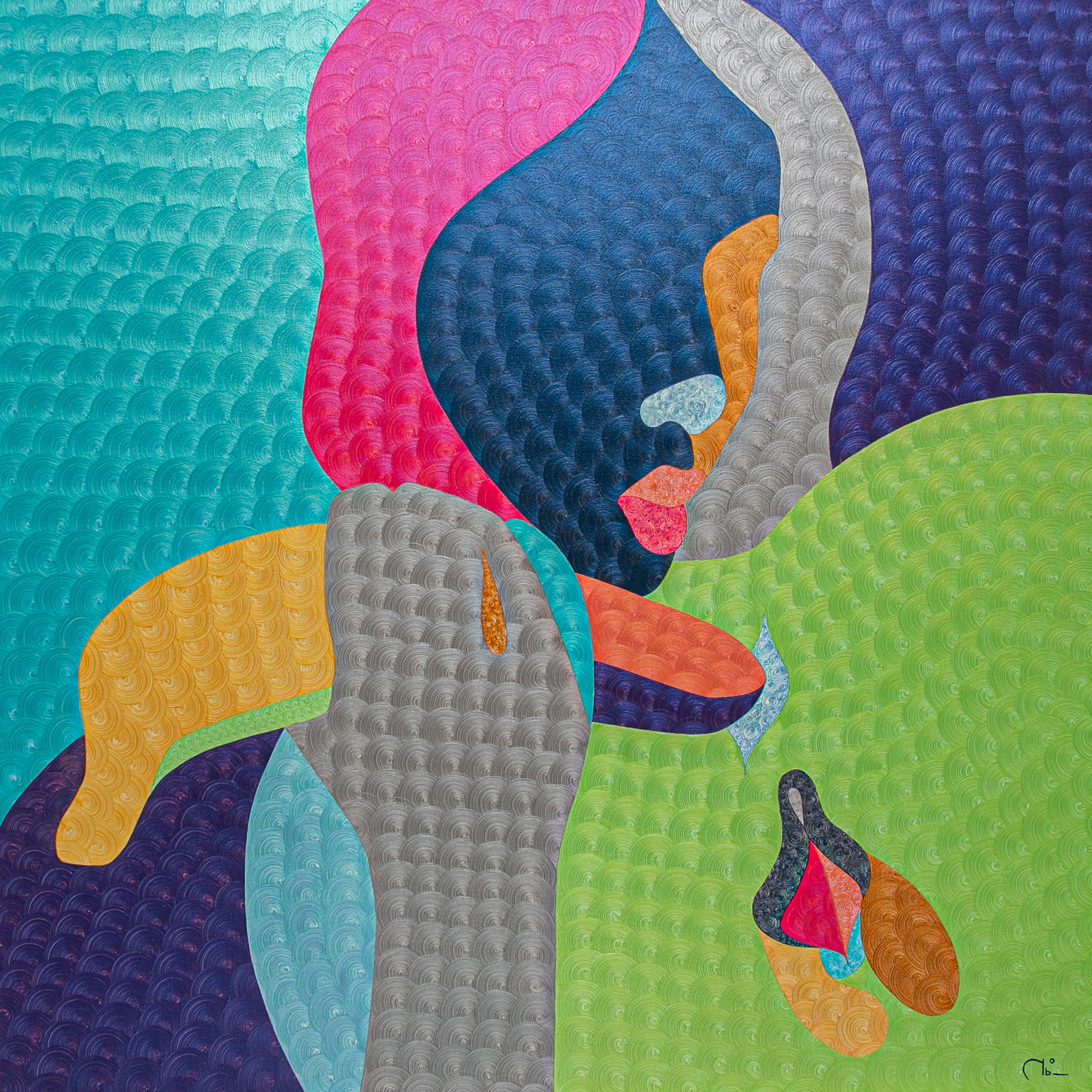
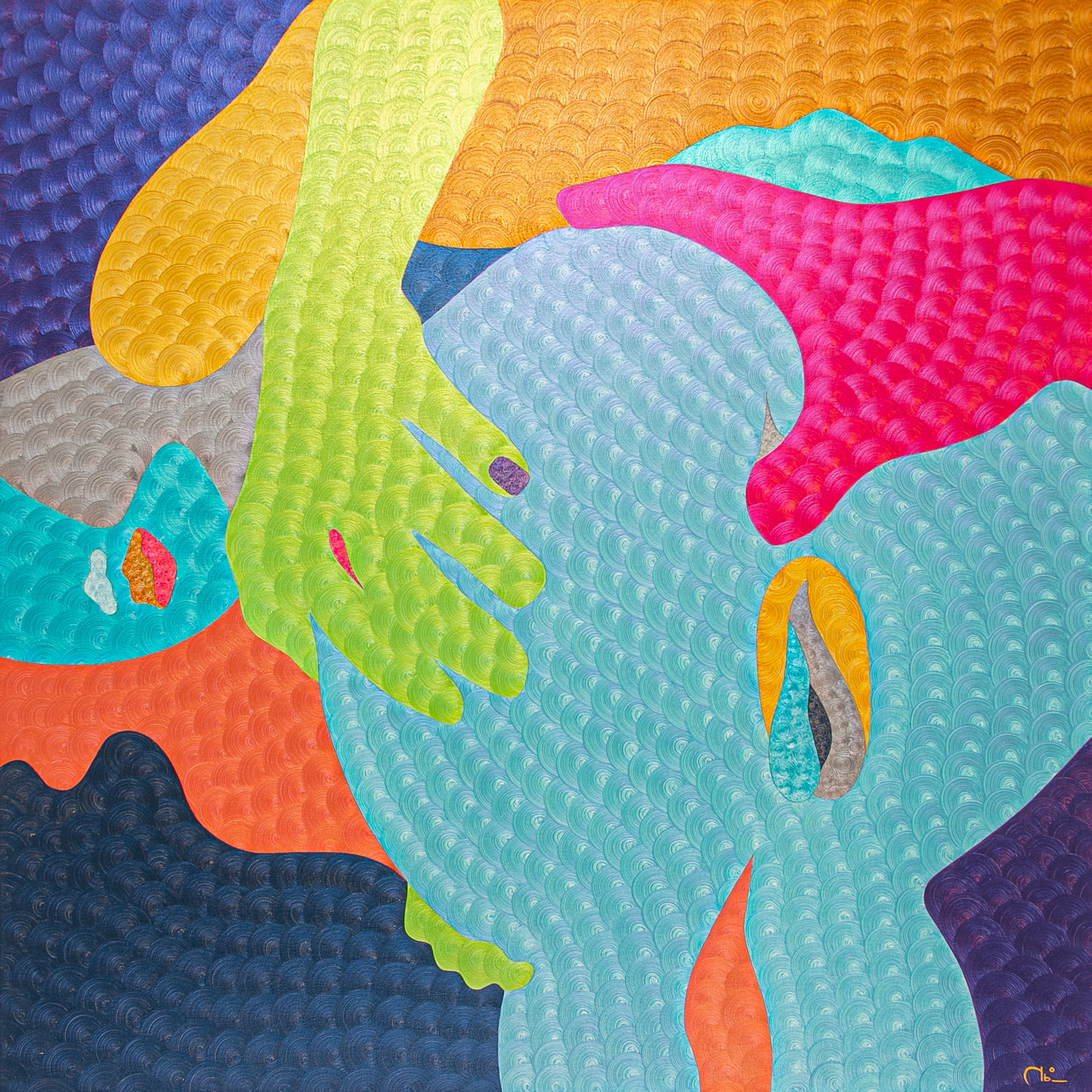
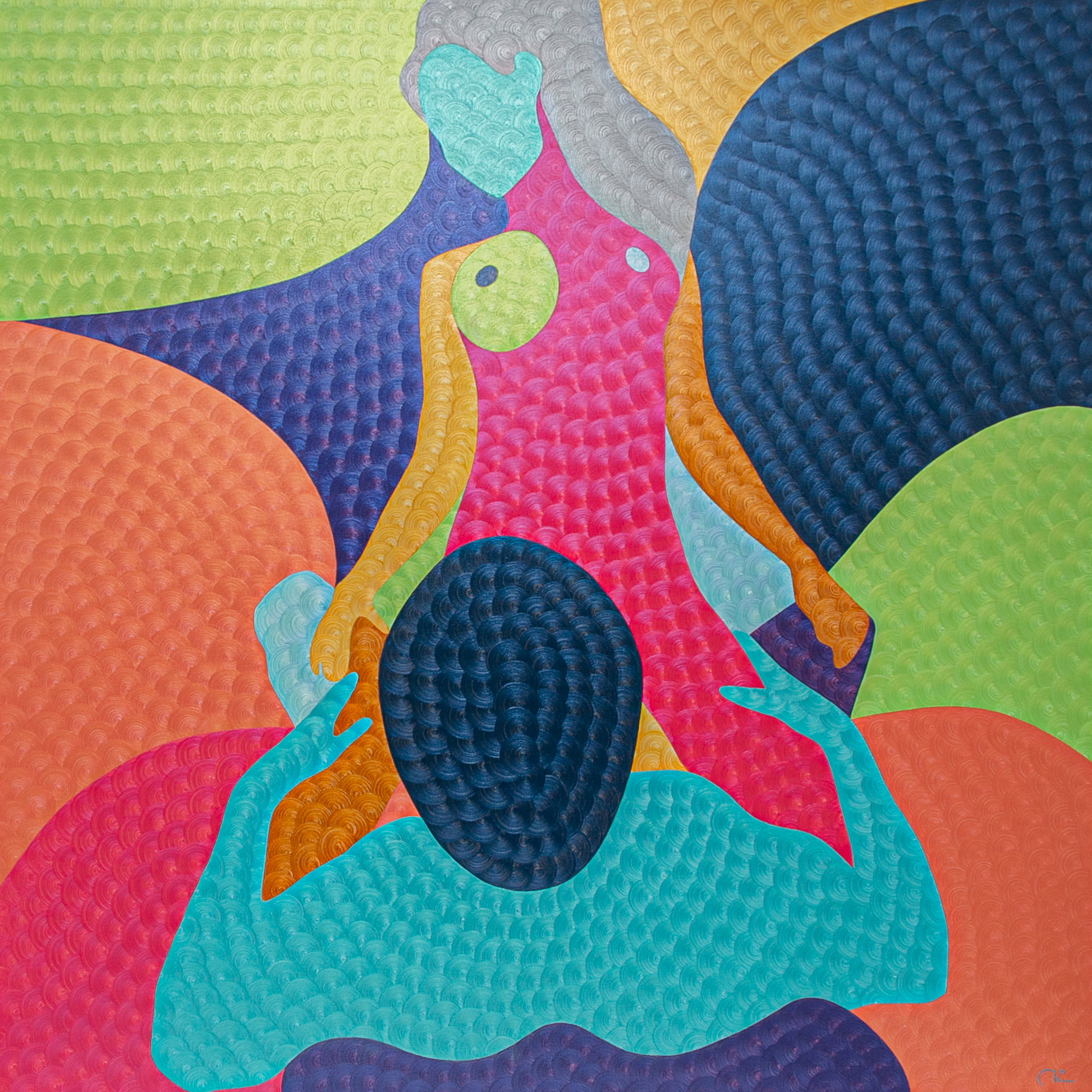
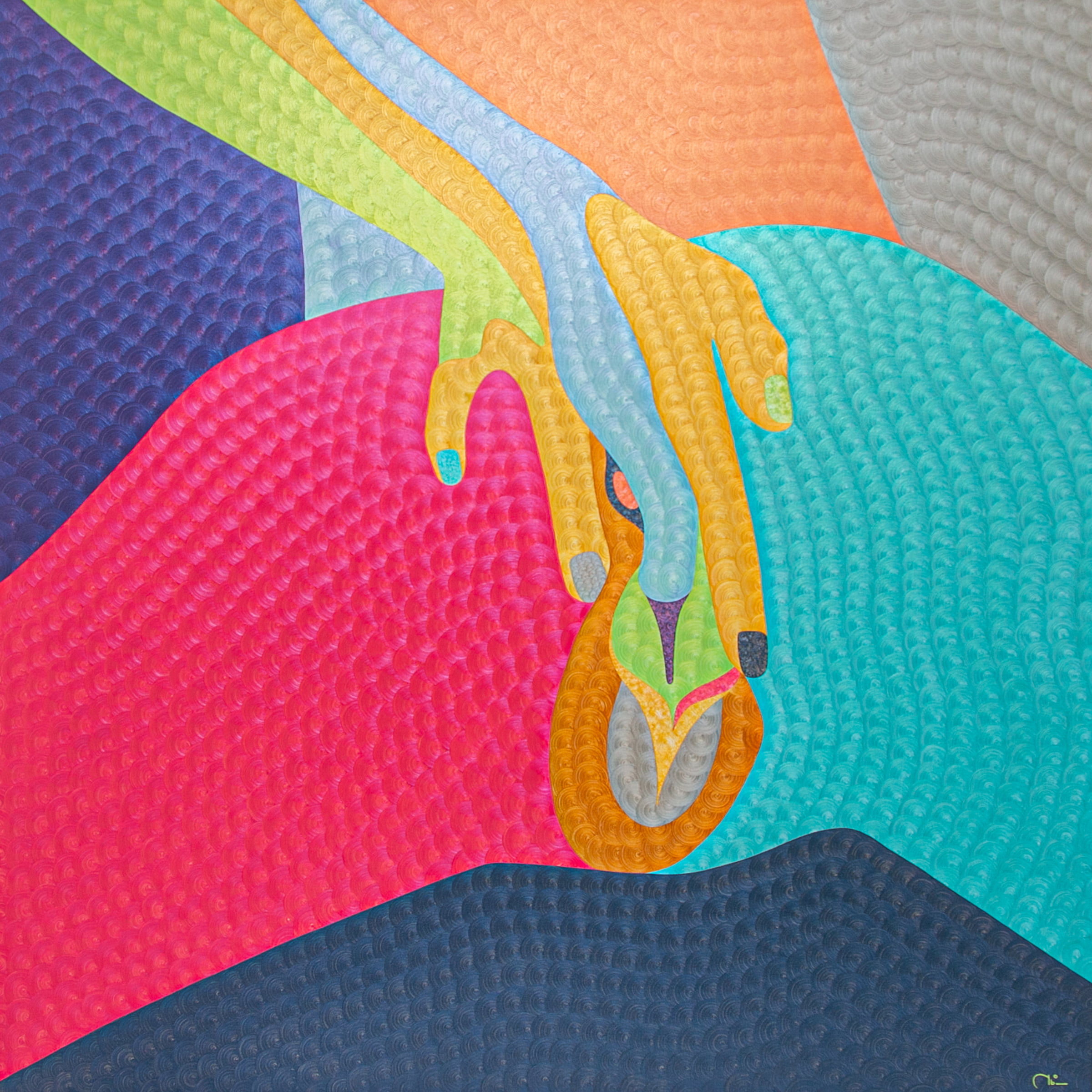
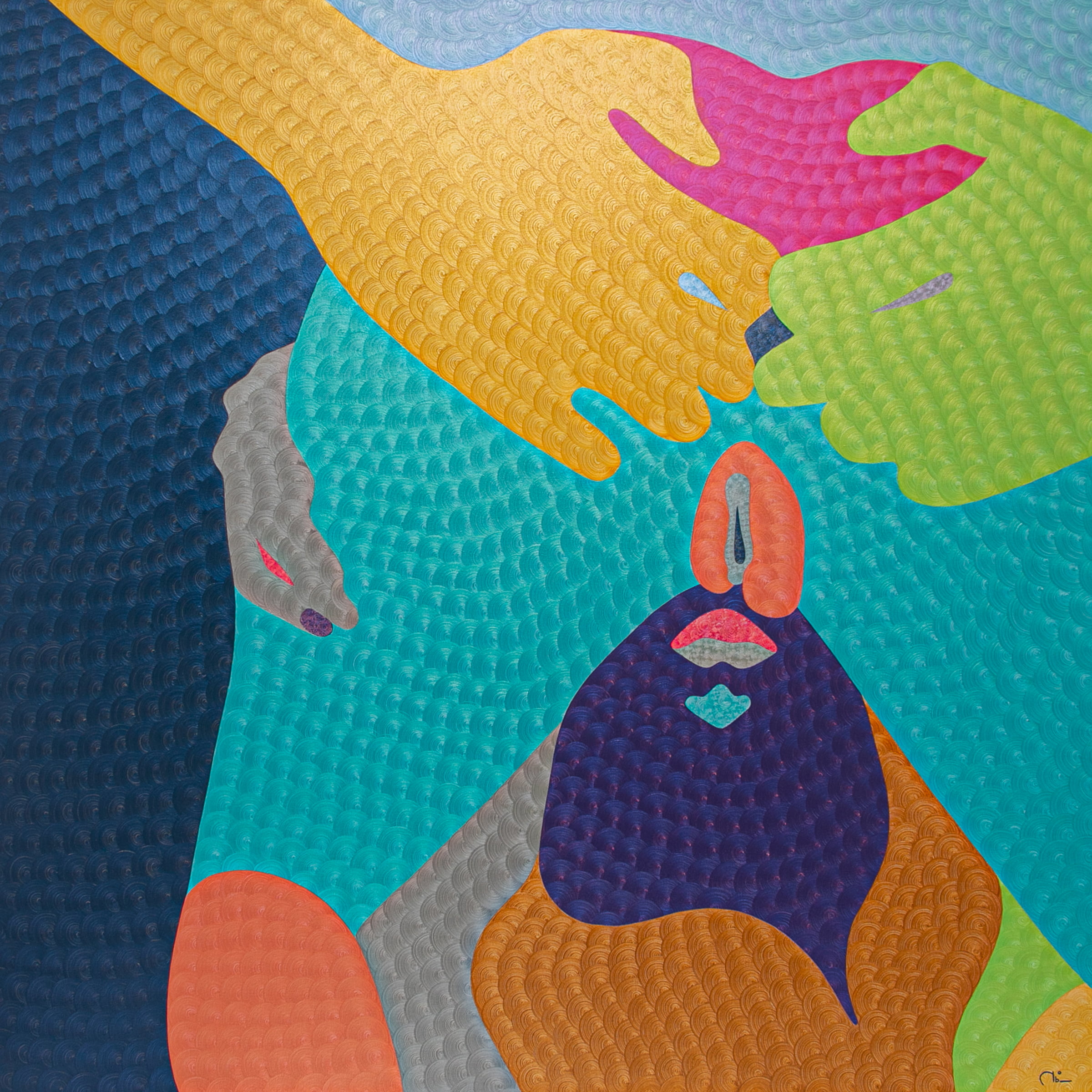
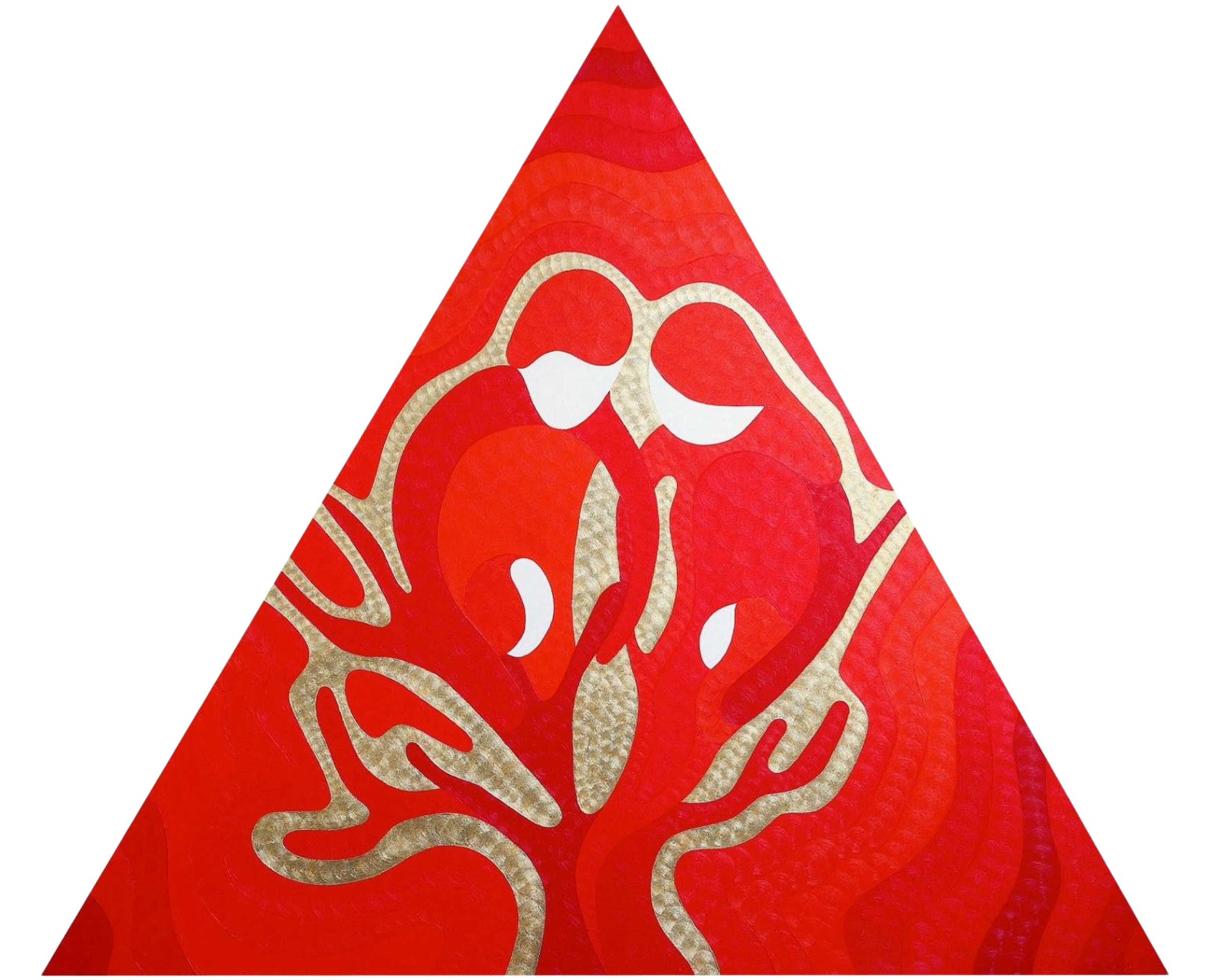
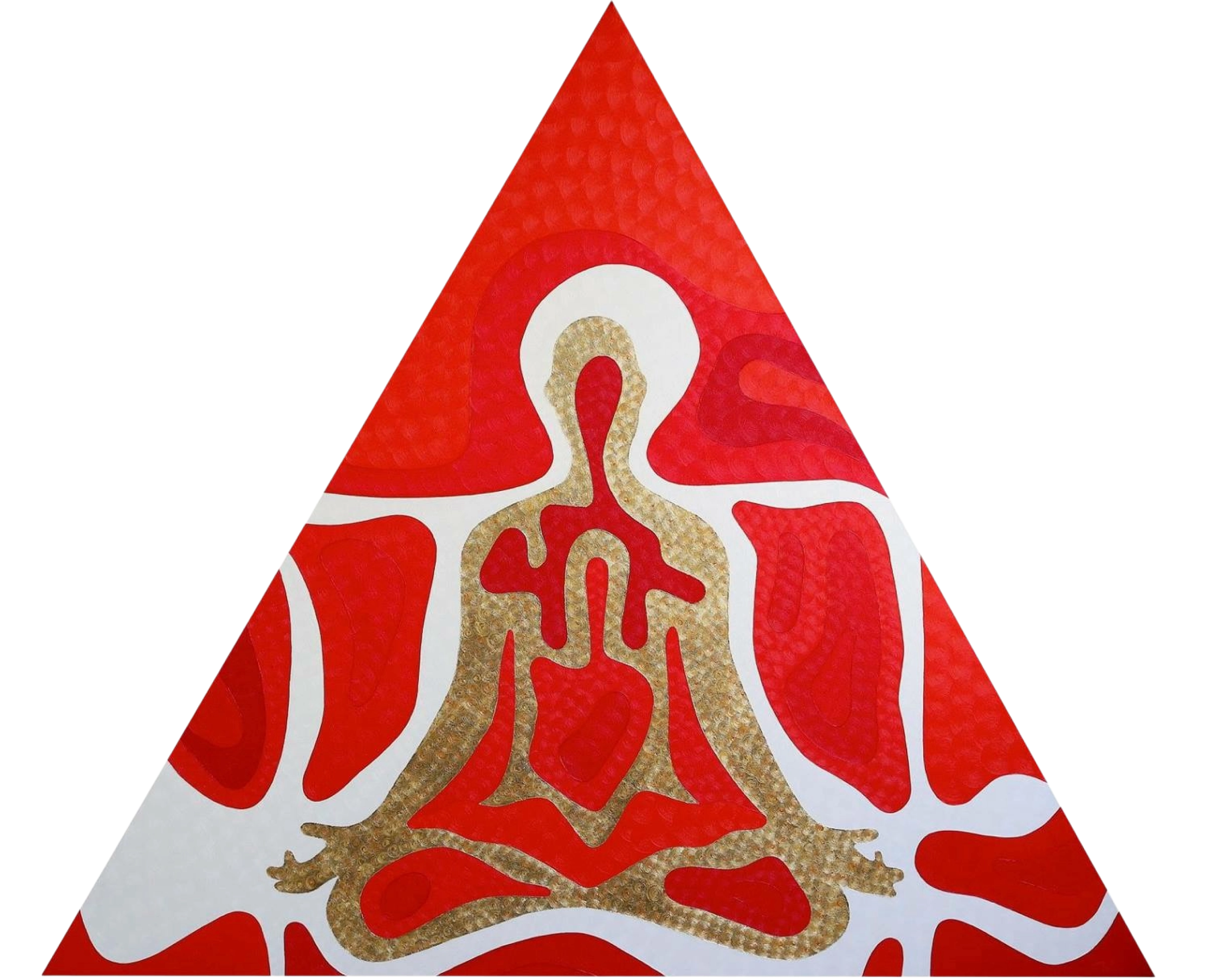
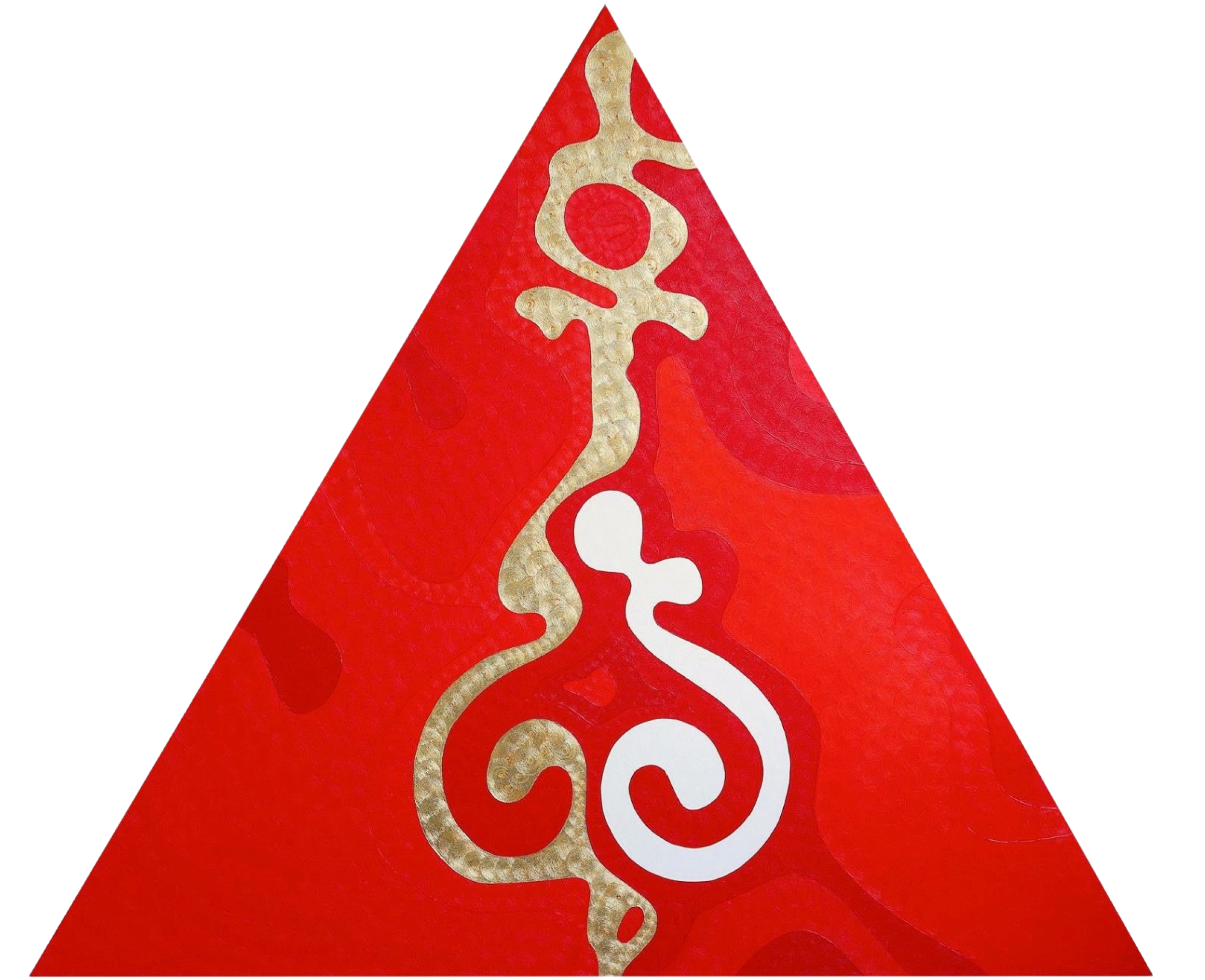
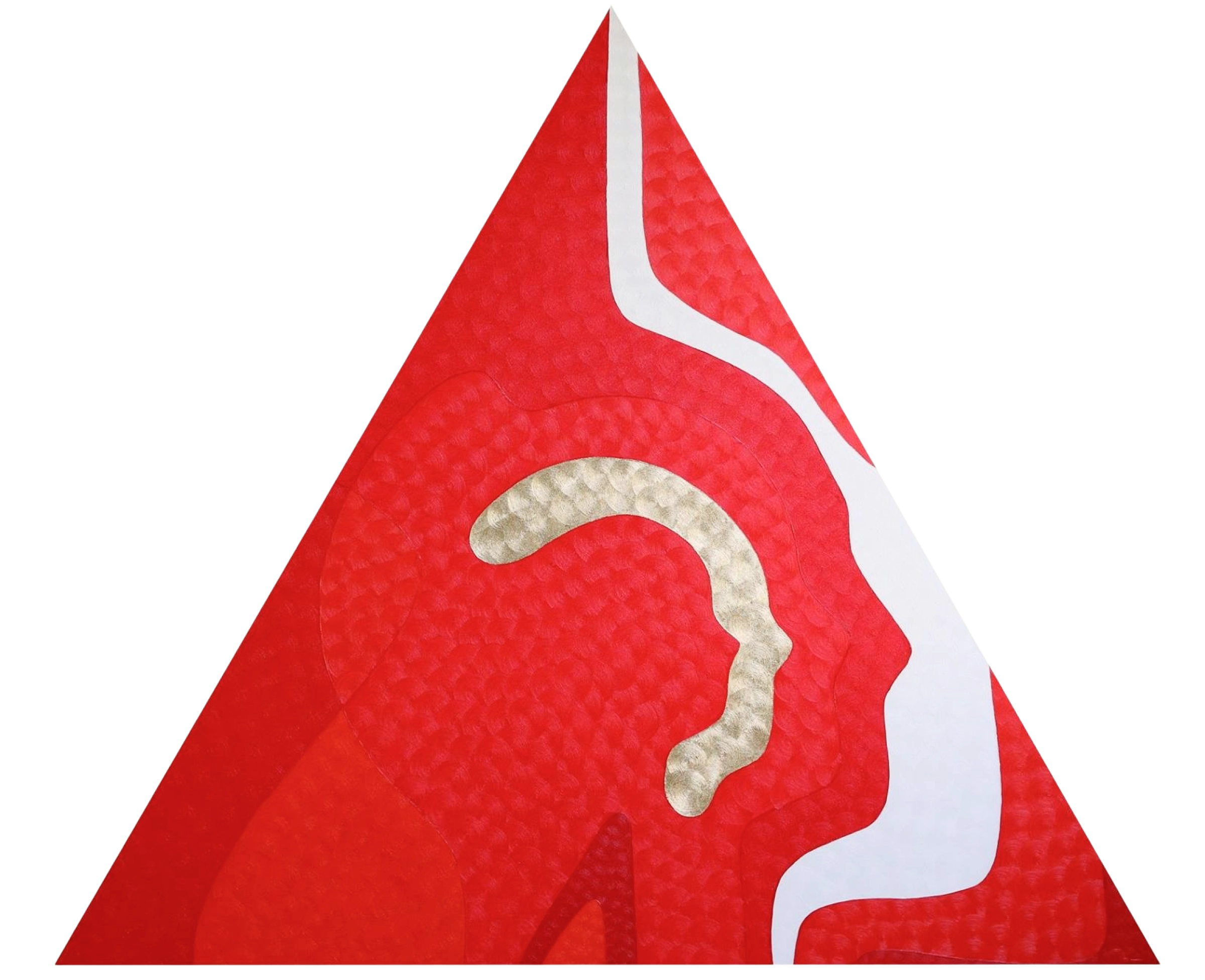
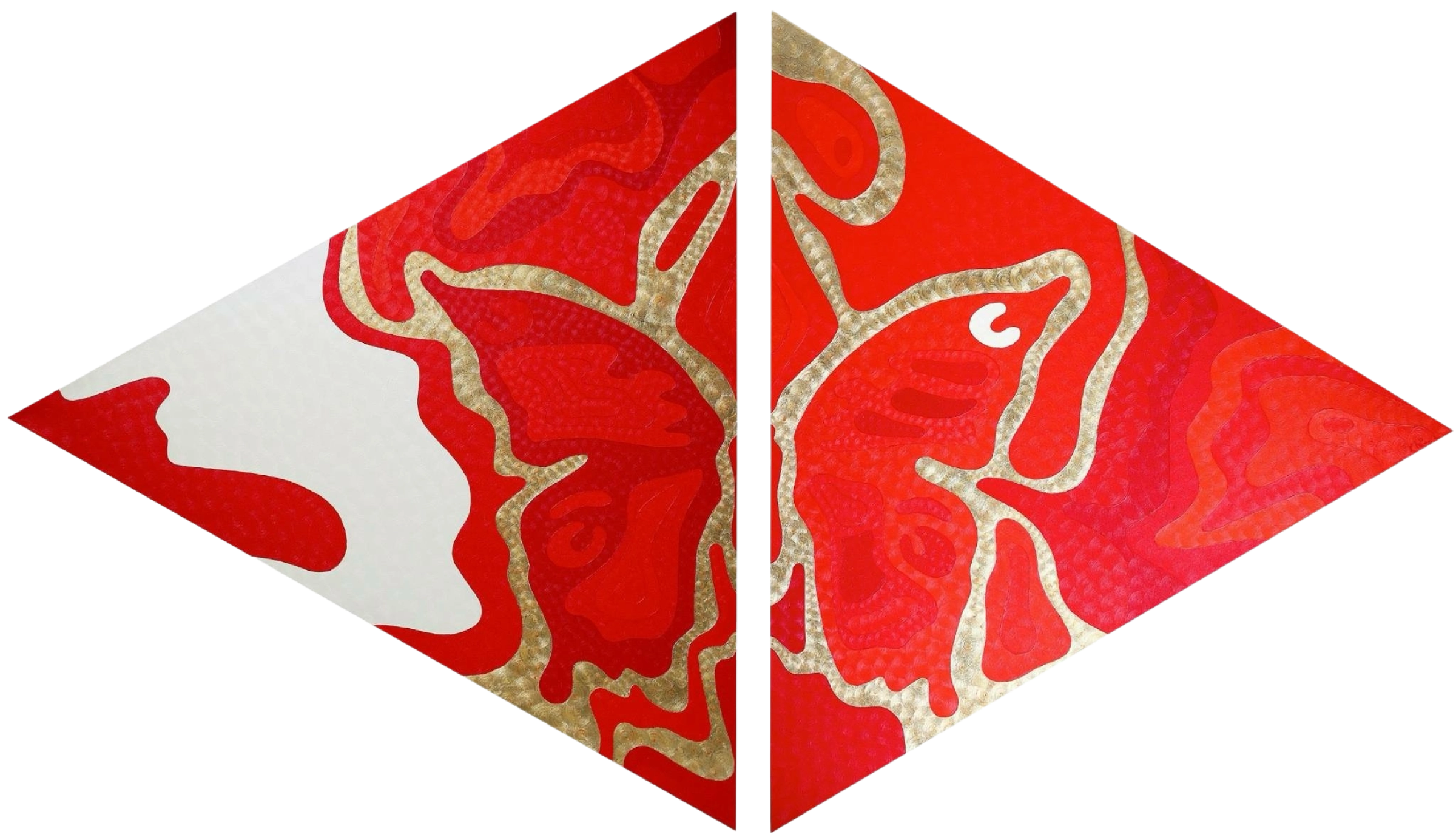
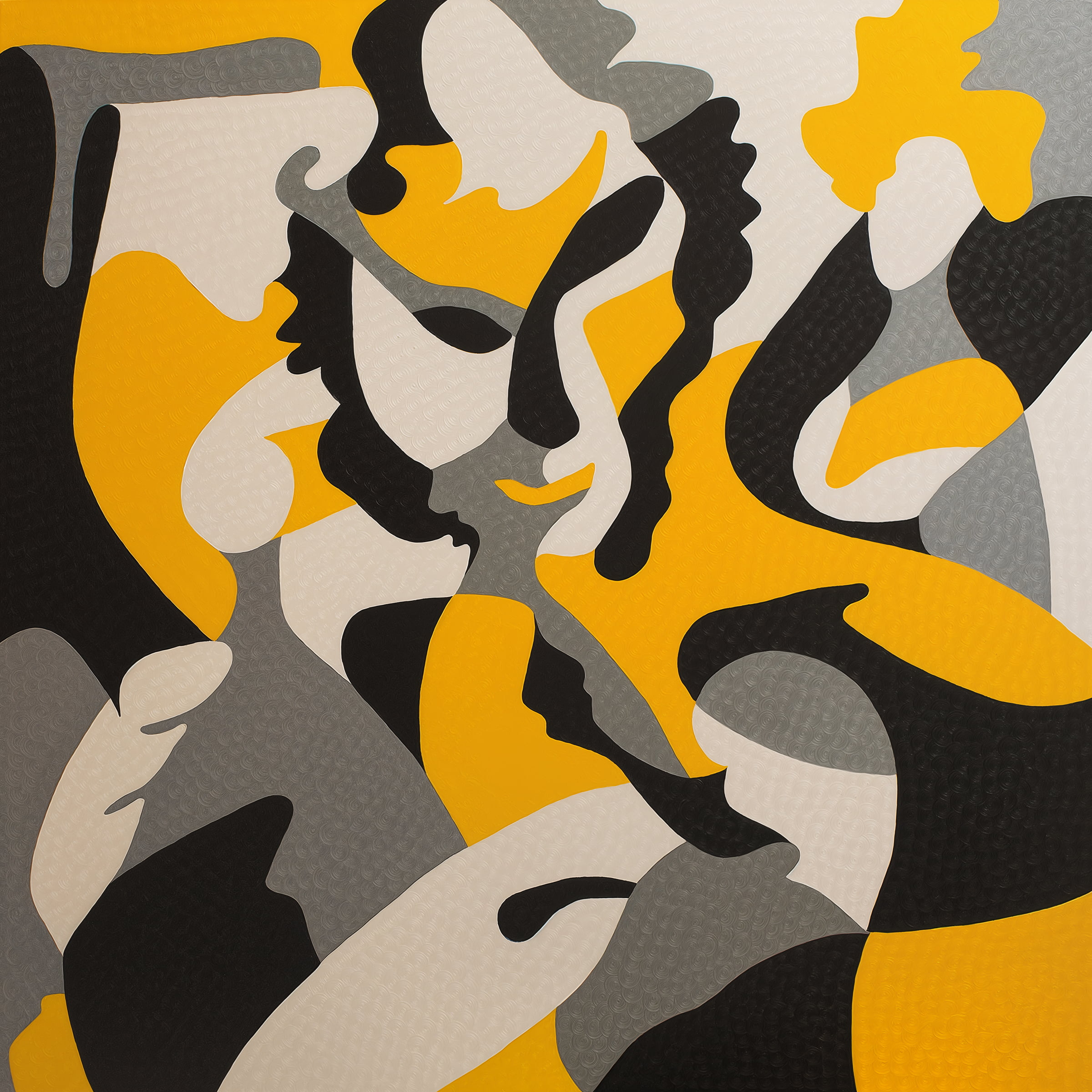
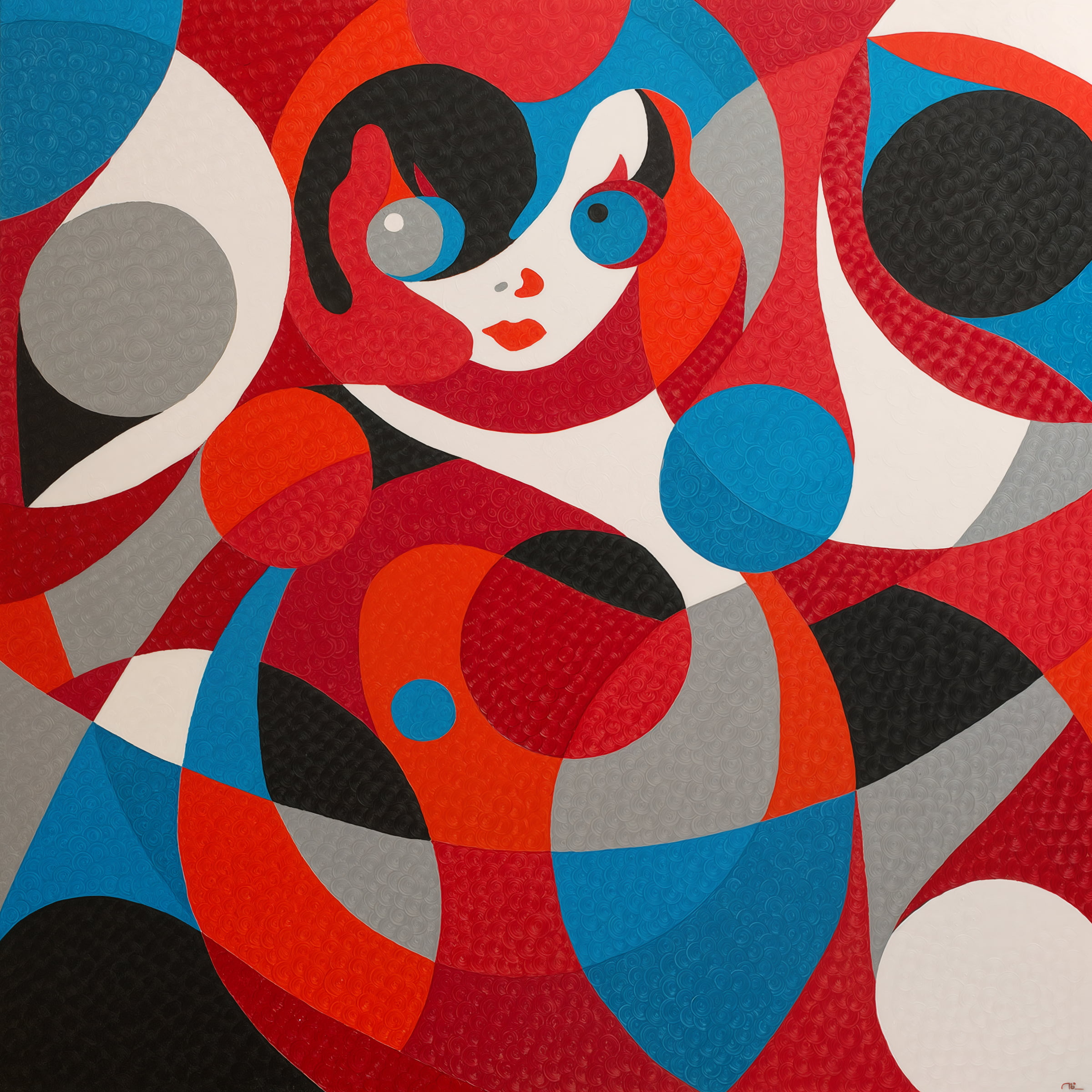
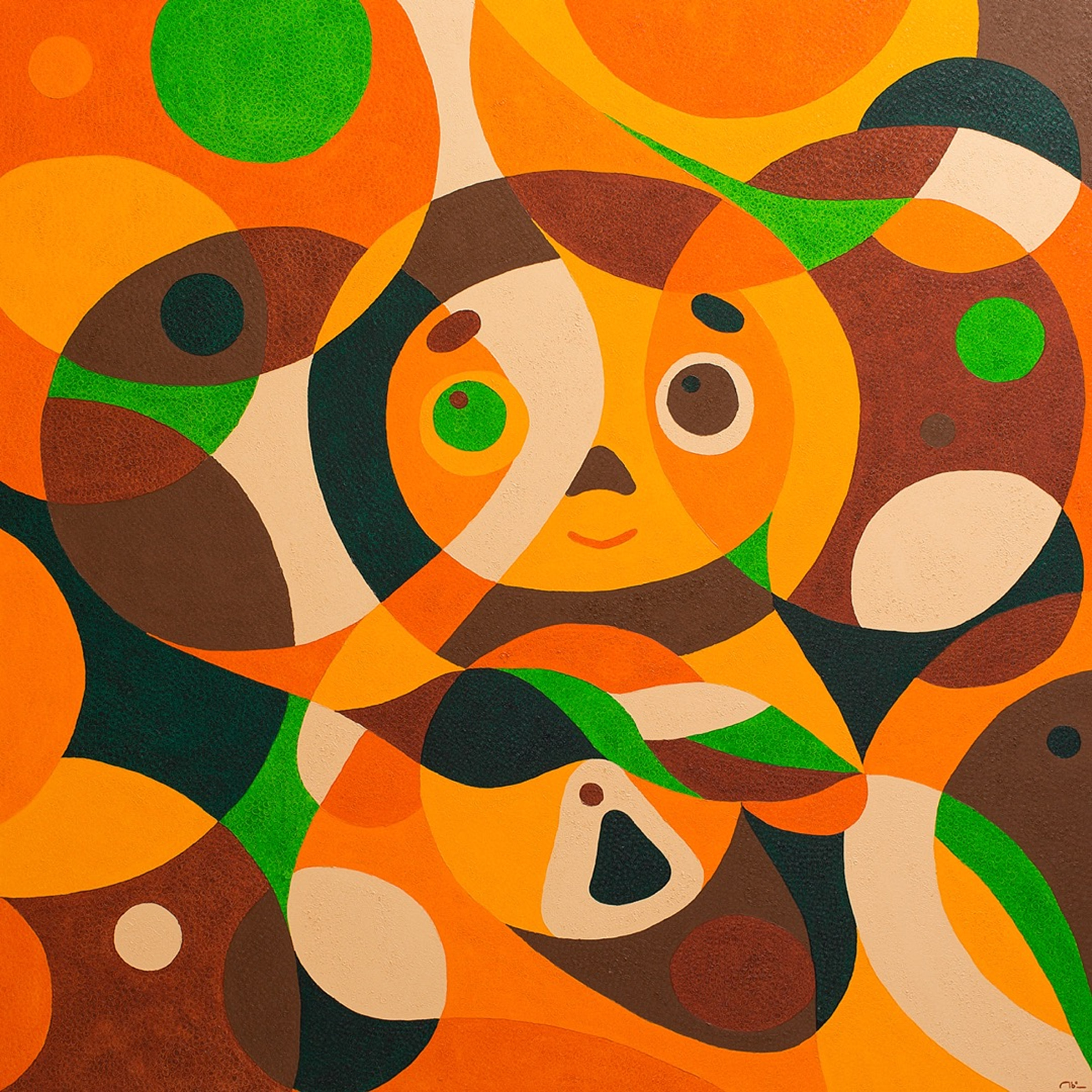
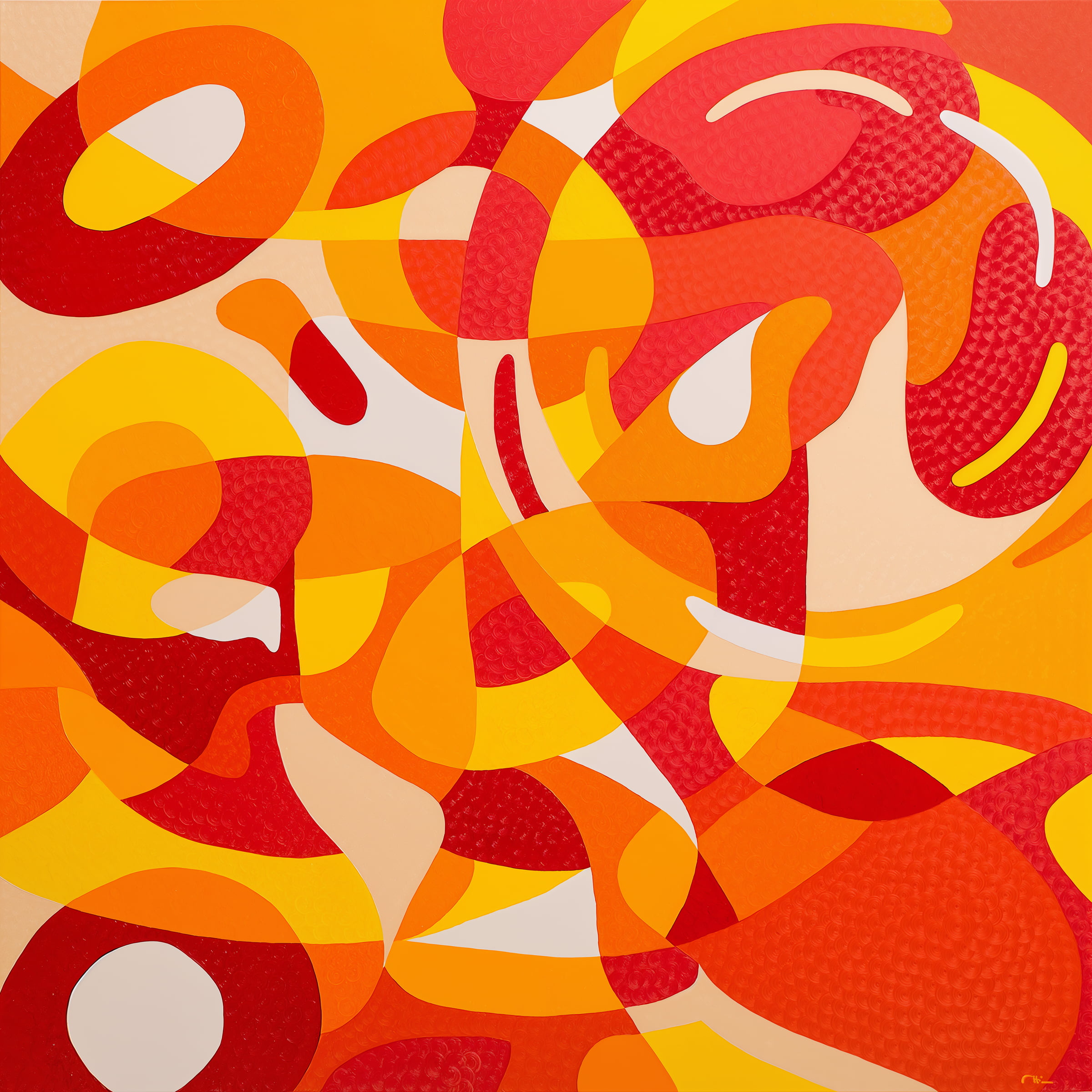
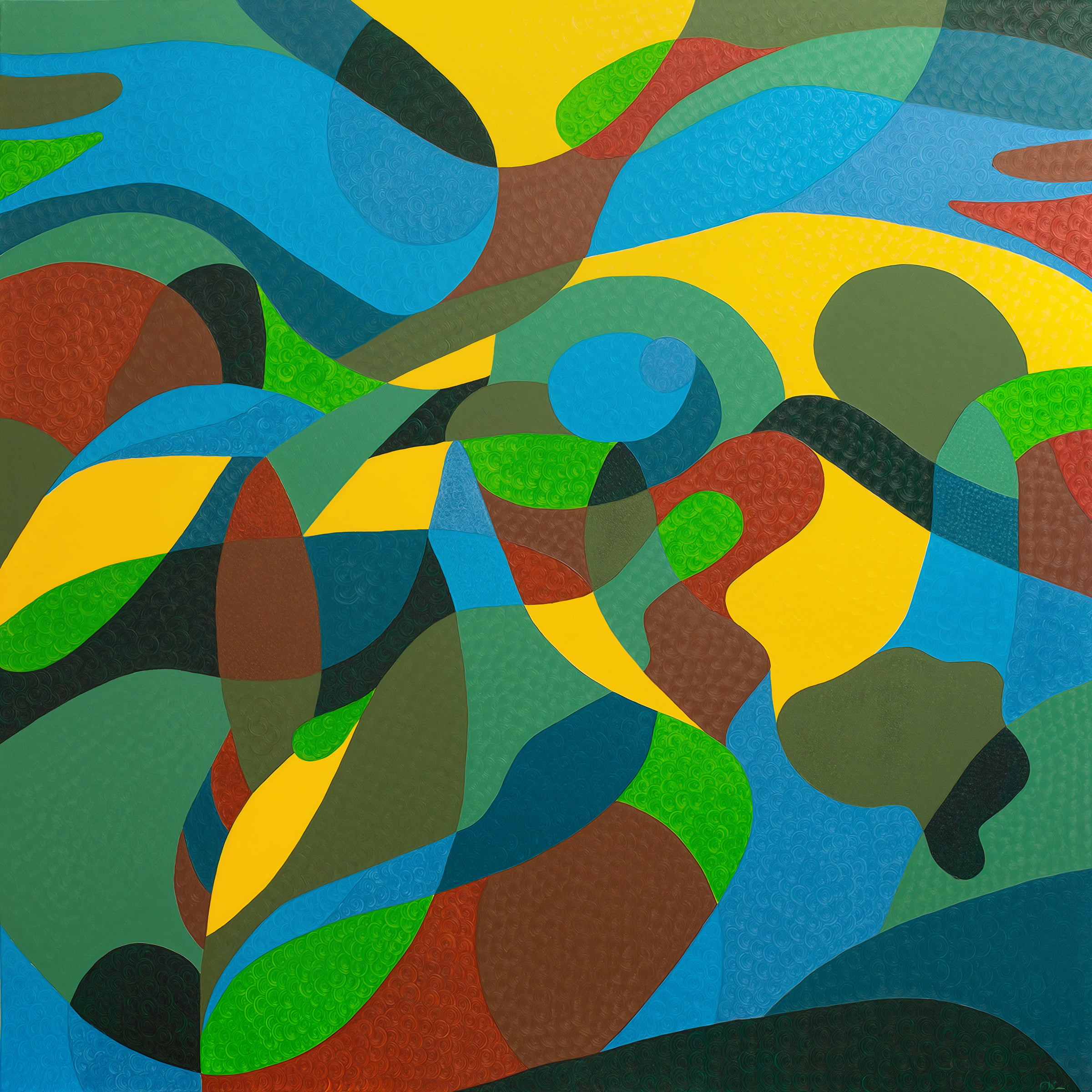
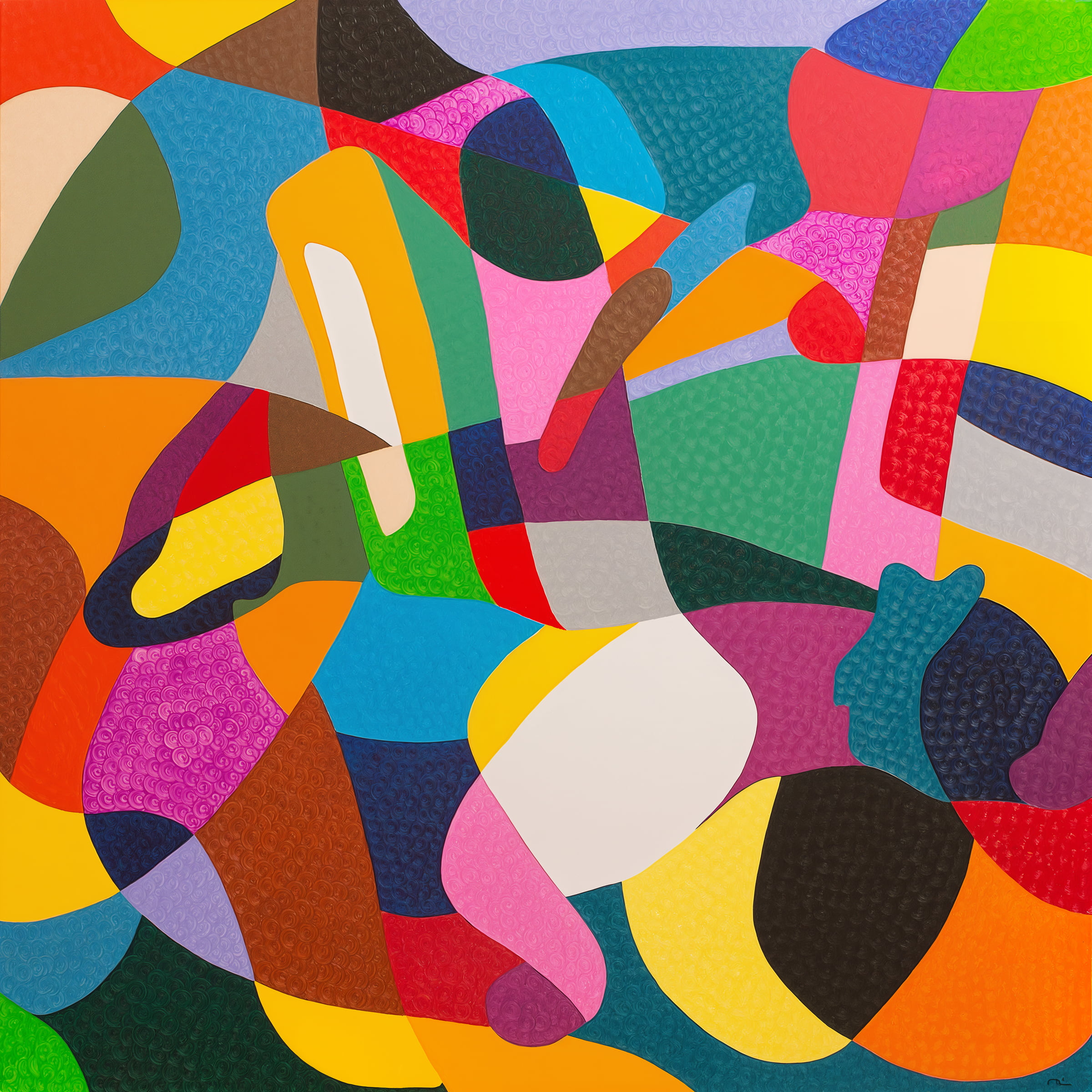
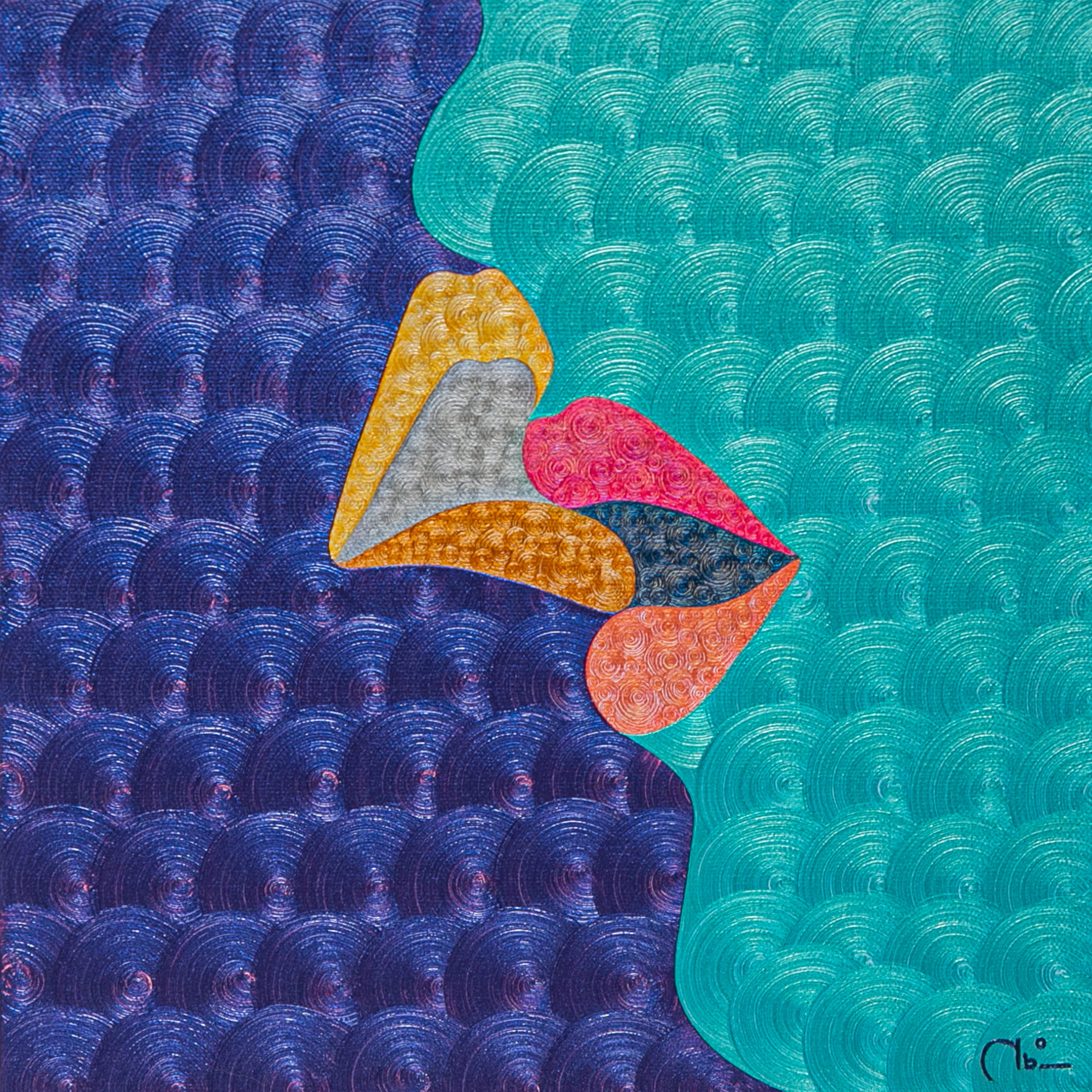
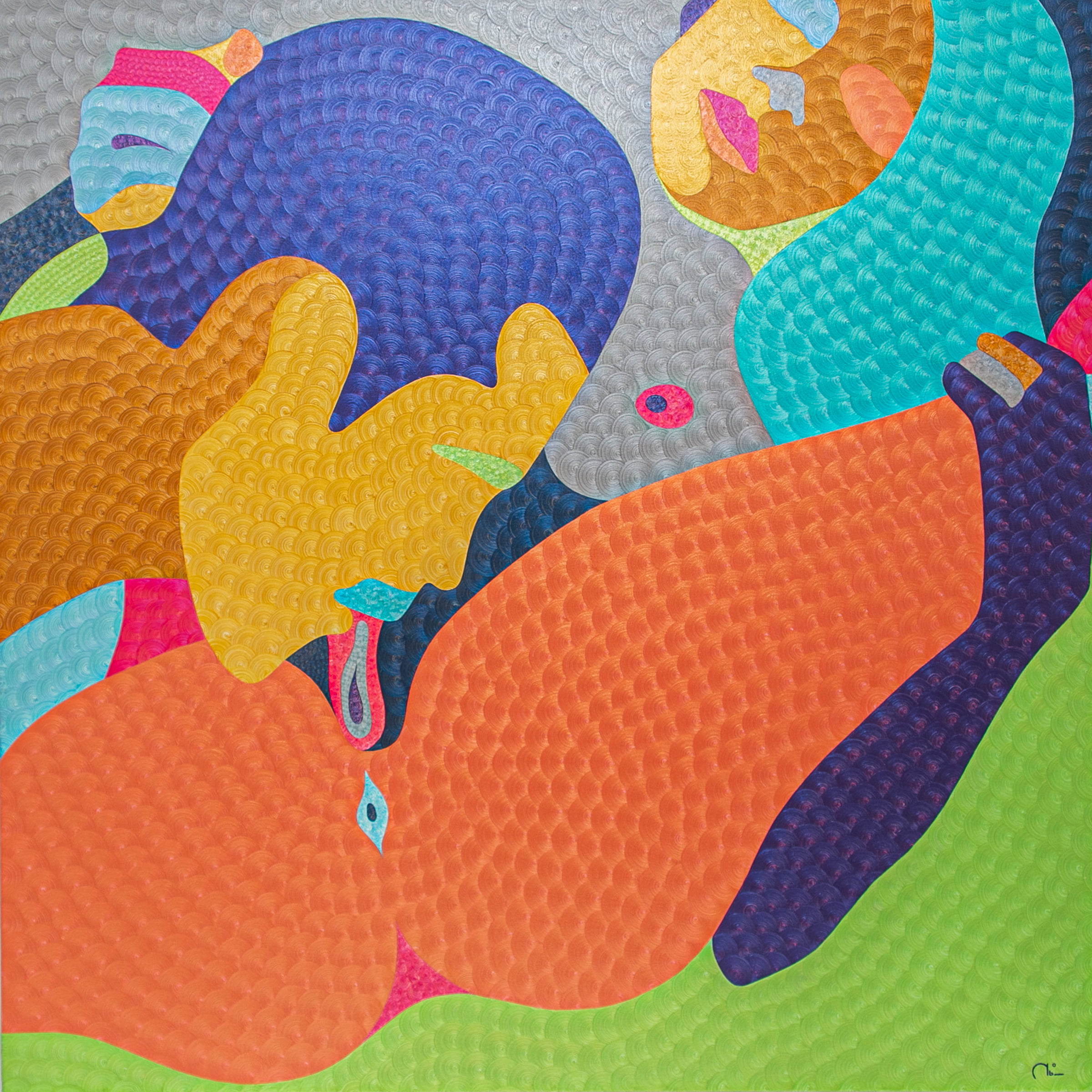
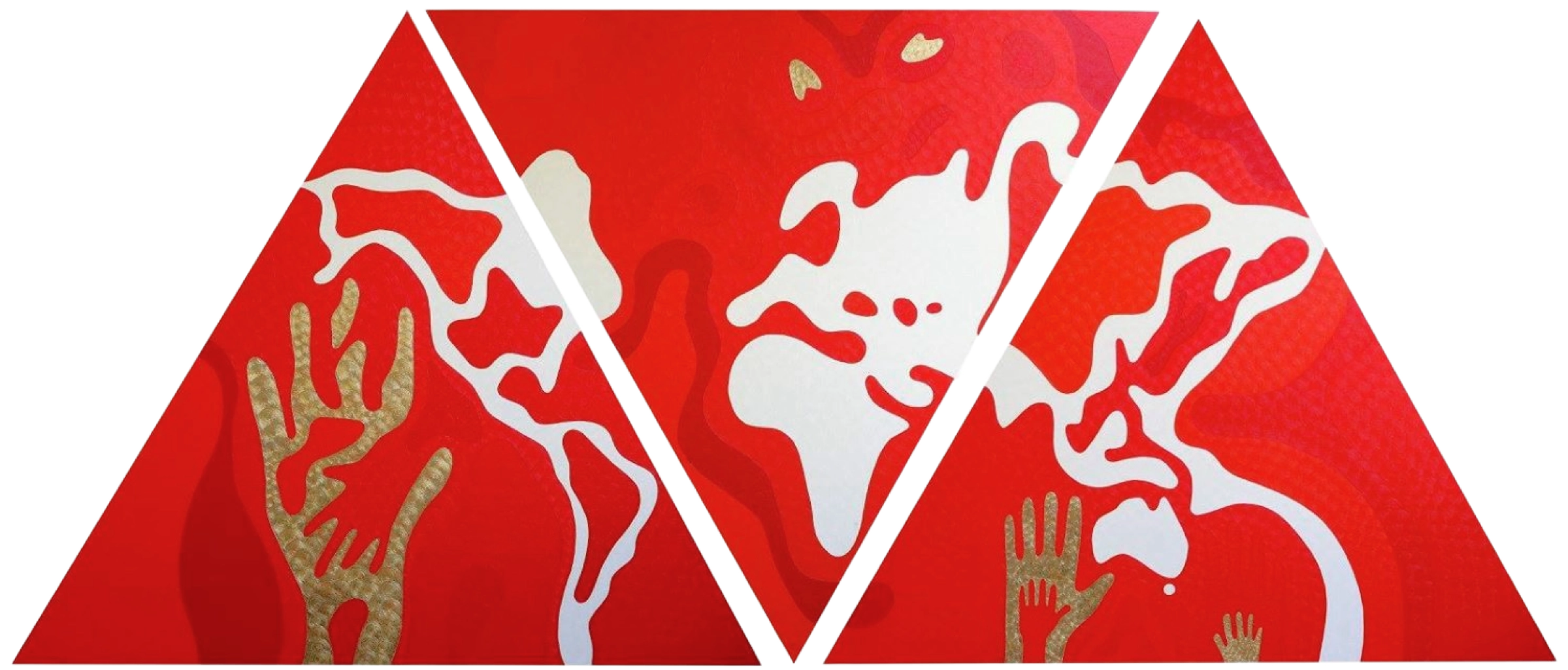
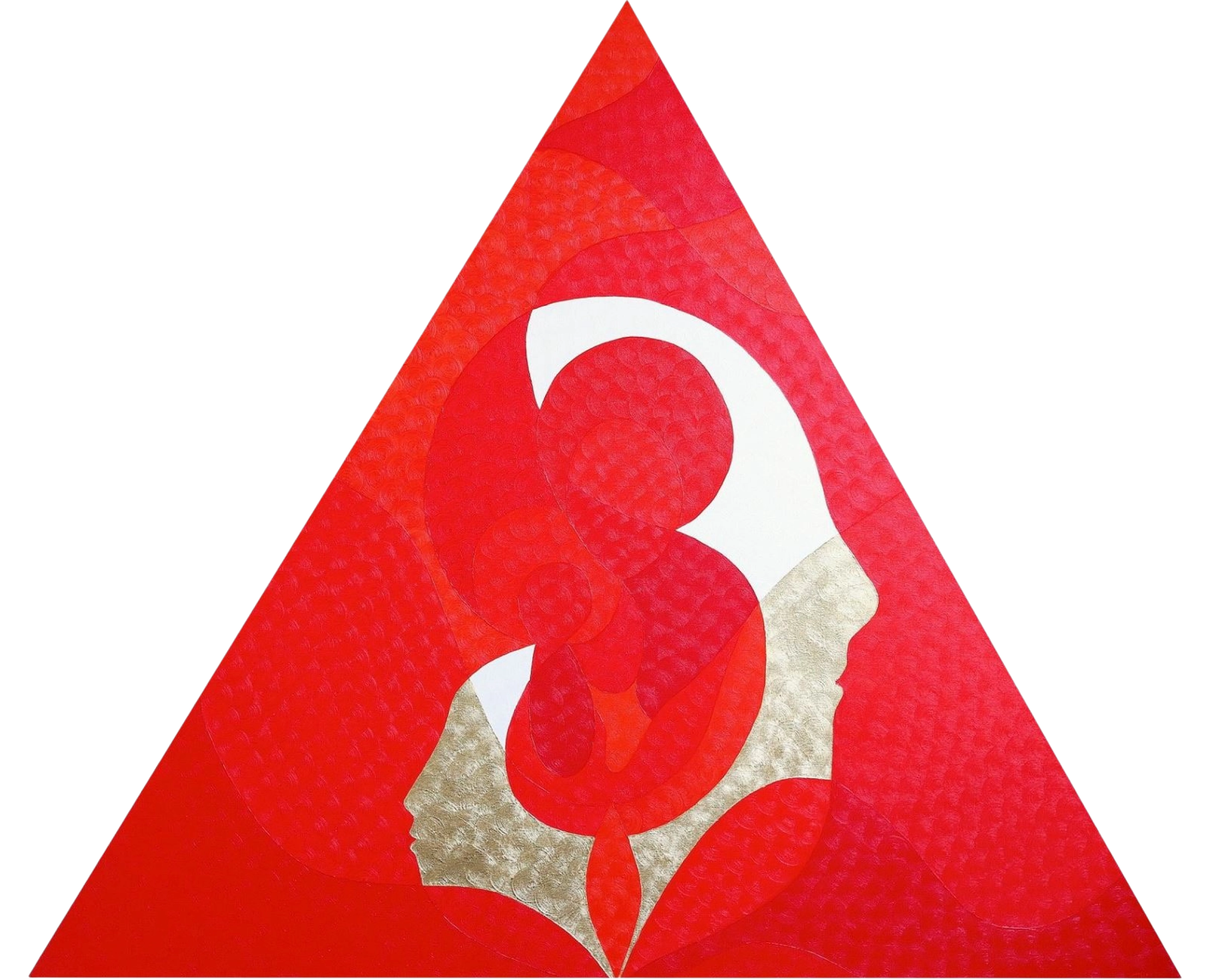
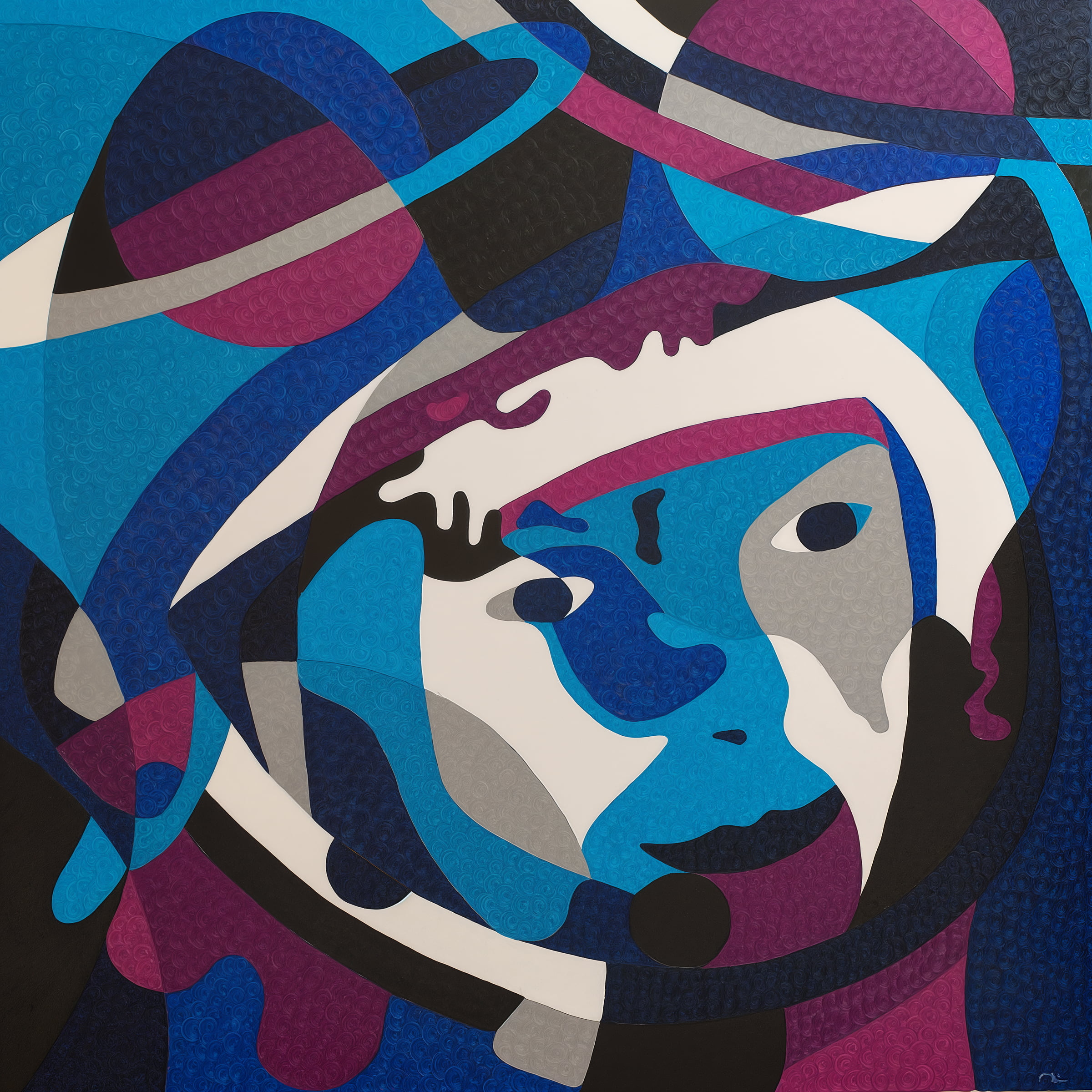
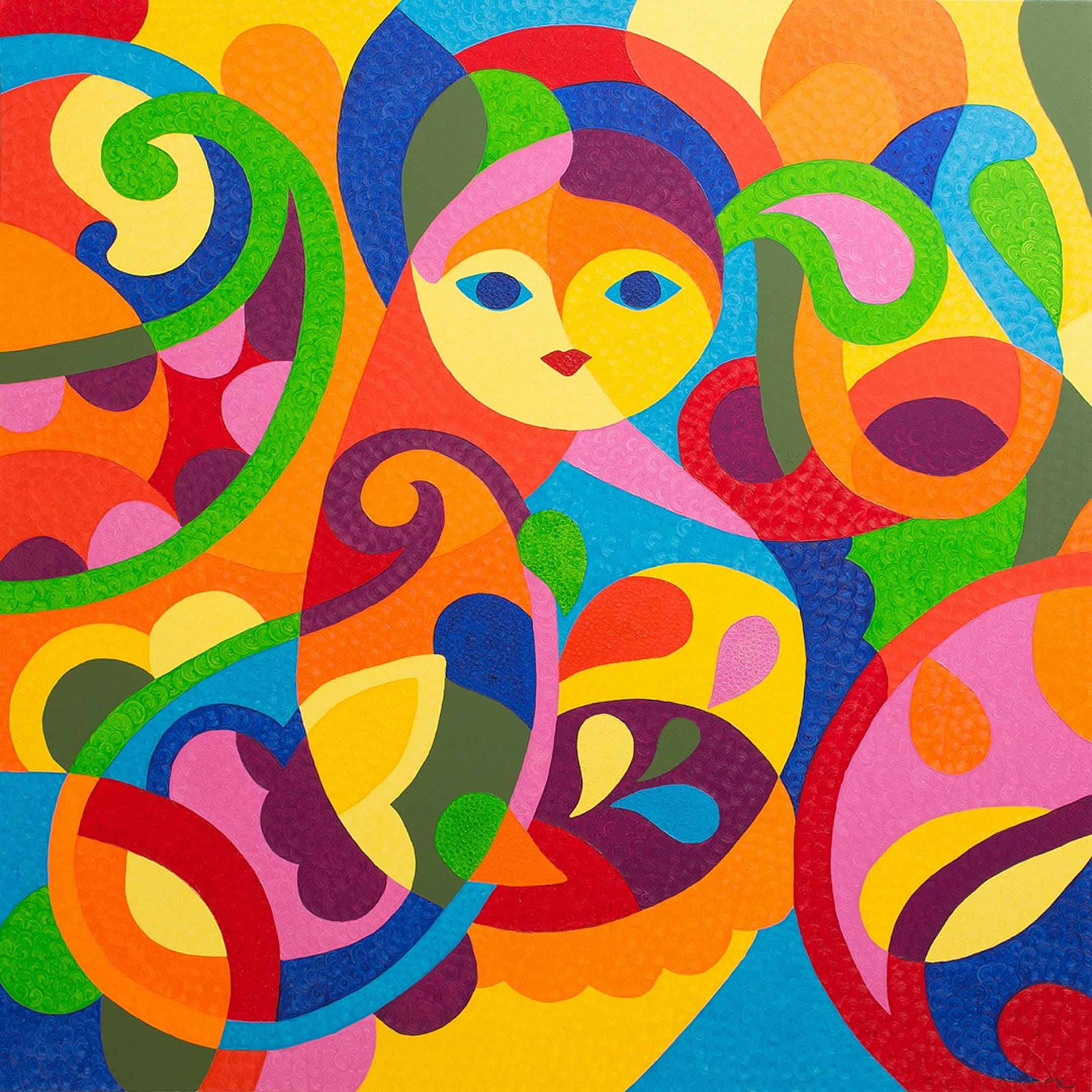
Bright paintings unlike anything else. Look closer, and familiar figures suddenly emerge clearly from among the abstract forms: Gagarin, Pushkin, a matryoshka, Cheburashka… Look closer still and you discover that they are painted in an unusual way: every brushstroke is curled into a spiral.
“I Twisted the Sky”
Natalia, you used to have a successful career in marketing and PR. Why did you decide to leave everything behind and start painting?
Working in marketing brought me a great deal of pleasure. You watch the fireworks at the end of an event you organized and think, “Oh yes! Well done!” I organized City Day celebrations and entertainment and sporting events. But I still wanted greater depth and development. In my case, that would only have been possible by moving to a very large company that organized incredibly ambitious events. The stress would have been much greater and the time left for my family much smaller. My family has always come first.
Besides, I had always dreamed of painting, even though I had never done it professionally. As things turned out, my husband gave me an enormous gift: he allowed me to devote myself to what I truly wanted to do. I had no doubts. I brought everything I had done in marketing to a graceful close and moved into creative work.
You created your own technique, TwiddleART—translated as “a spiral” or “a curl”¹—which makes it possible to create three-dimensional paintings with a distinctive texture. How did the idea come to you?
After leaving my career, I began working in an abstract style. At some point, I realized that my mother did not own a single painting of mine. I decided to correct that unfortunate omission. I began painting a landscape, also in an abstract style. I looked at the sunset: the colors were wrong, the texture was wrong. The red paint simply would not lie the way I wanted it to. Suddenly, I twisted the brush. I “twisted” the entire sky, and the result was such a remarkable effect that I knew I had to continue.
And you even decided to patent your own style…
Yes, that is true. My application is currently with Rospatent. First, a special review was carried out: for two months, specialists examined both the Russian and international patent markets and found no equivalent. It is a long process, and I hope it will be completed successfully.
What will that give you?
Professional artists might say that my paintings are all “kitsch,” that I have no education, that I am simply the wife of some influential man who began painting because she had nothing better to do. Opinions like that do not affect me. But a patent might lend the project a certain seriousness. For me, this is my life, my pleasure, my daily work. As the saying goes, “Without a piece of paper, you are just a little bug…” It is gratifying to think that history will preserve the fact that a self-taught artist from Tyumen invented this style.
There is not much that is truly new in painting today, and something new always attracts attention. Perhaps one day everyone will begin painting this way. Even now, when I lead workshops, my students want to paint with curls. Of course, I am not going to run around filing lawsuits and demanding, “Why are you painting in my style?” I simply want it recorded that the idea was mine.
“I Painted Everything About Russia—Except Vodka”
The paintings in your Russia series, which you presented in Novosibirsk, are striking in their subject matter: a kaleidoscope of matryoshkas, samovars and Gagarin… How did the series come about?
The Russia series emerged in connection with the events in Ukraine. I wanted to paint what I love and value in my own country. I realized that these should be recognizable symbols—brands, almost—in the same way that we recognize things in marketing. Except vodka, of course. That is how ten sketches were born. Everything came together with remarkable ease. Usually, when you are preparing a collection, you keep stopping to rest: your back starts aching, then your neck grows stiff. But here I was painting fourteen hours a day and did not feel tired.
Fourteen hours at the easel is almost like deep meditation—and the result of profound inner work on yourself.
It really is meditation. I like to paint while listening to mantras or music from Relax FM. It is a complete union with myself. Ideally, no one else should be in the studio—except perhaps people close to me, as long as they are reading or occupied with something of their own.
The qualities that allow me to work for so long are willpower, diligence and perseverance. When I behaved badly as a child, my mother punished me by making me do whatever my grandmother asked. My grandmother taught me embroidery, and I would spend hours doing satin stitch. That cultivated perseverance in me. I can work on one thing for a long time without being distracted by anything else. My grandmother embroidered pictures and wove enormous carpets. I became a continuation of her, but through my own art.
Artwork shown: “Cheburashka”
Artwork shown: “Gagarin”
Does any painting in this series have a special story? Or perhaps you love one of them more than the others?
Cheburashka, for example, took the longest to paint. The entire painting consists of tiny curls made with a black brush. I worked on it for a whole week.
But the jewel of my collection is a painting called Winter. It is snow-white, and at first the outline is difficult to make out. Yet if you look closely, you see open palms in mittens—a symbol of Russian hospitality. There is also an ushanka and a pair of valenki.² It may seem that the painting is empty, but in fact it radiates a great deal of love and warmth. I can feel it. It is a warm winter.
What will a painting become? Do you think it through in advance, or does everything emerge on its own while you are working?
First, I make a sketch on paper. I imagine the figures that should appear and then weave them together with lines. In the painting featuring Putin, for example, the Kremlin appears along the sides, while a club-footed bear sits beside a balalaika, a bayan³ and a birch tree. Only after the sketch is complete do I choose the colors and curls and transfer the painting to canvas.
Each of your paintings is like a workout for the mind, a puzzle shaped differently for every viewer. Is it primarily a way of engaging the public in dialogue—or rather an inner monologue that you express through a painting?
I do not paint for myself. It is unquestionably an invitation to dialogue, a conversation between people about particular subjects. I like it when viewers find something of their own in these puzzles—even things I did not paint at all. That is amazing. My mother, for example, saw a parrot in the painting Club-Footed Bear. We laughed so hard. She had found that parrot in my birch tree.
Are the curls different too?
Yes. One kind of curl is made with the brush itself. Each bristle then removes a certain amount of paint, producing one effect. Another is made with the handle of the brush. The paint is pushed apart and pressed down, creating a smaller curl.
“I Couldn’t Repeat My Paintings Even If I Tried”
What are you working on now? Probably writing a new series of paintings?
For now, I am busy with exhibitions. I happened to organize shows in Moscow, St. Petersburg, Tyumen and Novosibirsk. Organizing them takes a great deal of time: choosing venues, advertising, transportation and building an audience. I also paint commissioned works.
As for a new series, it will require complete dedication and a great deal of time. When it emerges, I will begin work on a collection called The Fruit of Love. It will be about kindness, compassion and honesty—everything my family lives by, and everything people should live by in general. Once again, it will be a dialogue, an opportunity to speak with the viewer about human values. I think the collection will be ready by February, in time for Valentine’s Day.
Artwork shown: “Matryoshka”
Artwork shown: “Samovar”
You said that you also paint commissions. Could you repeat one of the paintings from this collection for a client?
Because it is handmade, repeating it is impossible. Sometimes I think: what if, a hundred years from now, I become a famous artist and someone wants to copy one of my paintings? It would be impossible to find exactly the same brush, arrange its bristles in precisely the same position and move the hand exactly as mine moved. Even I cannot reproduce my own curls identically. My paintings cannot be duplicated—not even by me.
What do you teach in your workshops? Your own style?
Above all, I teach people to remove the frames and limitations they impose on themselves. If someone wants to learn something or achieve something, there can be no boundaries. The people who join a group all paint in completely different ways. I try to inspire them, lead them forward and praise them often. I want them to continue painting for themselves and for the people close to them after I leave—to understand that they are artists, and not be afraid.
Which established artists inspire you?
I could give the standard names: da Vinci, Picasso, Andy Warhol. They are artists whose work everyone loves and knows. But to me, every person is an artist at heart. Even if they do not paint what the masses accept, I see uniqueness, character and a reflection of the soul, and I admire it. Even if someone has never studied art but paints something wonderful, I think, “Wow! They made my day today.” That gives me the impetus to paint even more—and even better.
What else gives you that kind of impetus?
My inner artist keeps me from sitting still and tells me that I have achieved too little, that this is not yet the limit. It demands, “Come on—hold an exhibition in Europe!” It pushes me to study, so that when someone asks, “Do you have an art education?” I will be able to answer, “Yes, I recently received a diploma from such-and-such school in Italy.” I really am planning to improve my language skills and study in Europe.
“I Hid the Cutlets in the Refrigerator”
You lead a healthy lifestyle, do not eat animal products and follow Vedic principles. What does that give you?
I have disliked meat since childhood. I would give cutlets to the dog or hide them in the refrigerator. When I began living independently, I simply stopped cooking meat for myself. I never thought of it as vegetarianism—I just did not eat meat, that was all.
At some point, I realized that my diet was very limited, and I began searching for interesting recipes. That is how Vedic cooking came into my life. My husband also enjoys what I prepare. If I serve lentil cutlets for lunch, he does not ask, “Where is the meat?” At the same time, I always prepare a meat dish for his dinner. Vegetarianism is my choice alone. If he wants to share it, he will tell me.
As far as I understand, Vedic culture means more to you than delicious recipes.
Yes. The Vedas strengthen a family wonderfully, and I follow these principles. For example, I make a clear distinction between men’s and women’s responsibilities. My husband does not touch household work at all: ironing, laundry, cleaning and cooking are all my responsibility. What matters most to me is preparing him a delicious breakfast in the morning, seeing him off to work, and welcoming him home in the evening looking beautiful, to a tidy apartment and a delicious dinner on the table.
When my girlfriends ask how we manage to keep our family so strong—to preserve and increase our love, support one another and care for each other—I tell them about the Vedas and send them lectures. I have drawn so much happiness from them that it would simply be wrong not to share this source with others. In whatever way I can, I use my own example to tell them about the remarkable things that have happened in my life thanks to the Vedas and a healthy lifestyle. These are deeply personal moments that can only be shared with those closest to me, but they leave no doubt that it truly works.
I also once listened to lectures by the Vedic astrologer Marianna Polonski. She said that, in order to live in harmony, each day one should serve a particular planet by performing certain actions so that it will help you. This made a powerful impression on me. I realized that Jupiter was the planet closest to me. To please it, I began preparing treats every Thursday and sharing them with people. For example, I often pack a tray of treats for my husband to take to work that day. Everyone there already looks forward to Thursday.))
Despite all this, I remain Orthodox Christian. I experience no conflict. I simply take from the Vedas what I feel is missing in Orthodoxy.
“Write Your Dreams Down on Paper”
Artwork shown: “Pushkin”
Artwork shown: “Village”
For a while, a very unusual pet lived in your home—not a cat or a hamster, or even a dog, but a real slow loris. Why did you choose that particular animal?
We very much wanted to give someone our love and care, so we decided to get a loris. We had him brought from Moscow. He lived with us for three months, and then we gave him to a family from Yekaterinburg. There were several reasons. First, we were planning to move to another country. Second, I realized that an exotic animal had no place in an apartment—that it was my selfishness and whim.
A loris is nocturnal. And if you live according to the Vedas, nothing good happens at night: nighttime is for sleeping, while morning and daytime are for doing good deeds. But he would wake up late in the evening and begin pacing around his cage and crawling over the curtains. I had imagined that he would arrive and I would feed him fruit. But he simply would not eat it and demanded “live food.” It was very difficult for me to feed him live cockroaches and caterpillars. In short, there were both advantages and disadvantages. But I realized that a person and an animal living together should bring some genuine good. For example, you could adopt a cat through a lost-pet rescue and care for it. Now I would like to have a pet again, but not an exotic one. For the moment, though, that is unrealistic because I am constantly traveling.
You are a vivid example of how a person can change their own life. What advice would you give someone who wants to do the same?
Write your wishes down on paper. “I want to paint in the evenings.” “I want to feed my husband breakfast, lunch and dinner so that he does not eat in cafés.” “I want a new dress…” Once information is written down, it begins to work in a completely different way. You only need to look at it from time to time.
Usually, on January 1, I write a plan for the year: I want to hold exhibitions in certain places, paint a certain number of pictures, achieve certain results in my health and physical condition, create certain things in my family, travel to particular places… I write it down and put it away. On December 31, I check what has come true. Exactly 75 percent comes true. How does it happen? You could call it a miracle. And for it to happen, it is enough to want something sincerely and write that wish down. Then the whole Universe will try to make it happen.
Translation notes
- The explanation of the word “TwiddleART” as “a spiral” or “a curl” is preserved from the author’s note in the original Russian article.
- Ushanka: a Russian fur hat with earflaps. Valenki: traditional Russian felt boots.
- Bayan: a Russian chromatic button accordion.
The original article uses the artist’s name Natalia Lvova. The current website and artistic practice use Nala Kun. The current brand styling TwiddleART has been used consistently in this translation.